
The First Night With a Puppy: Helping Them Feel Safe
By Alex Moreau · Published August 4, 2026
TL;DR
Put the crate in your bedroom for the first weeks, not in an isolated room. Take the puppy out right before bed and once or twice overnight, on a set schedule rather than waiting for crying. Respond to genuine distress calmly and briefly, without turning it into play. A little crying in the first hour is common; prolonged, escalating crying usually means a real need, not just protest. Consistency over the first two weeks matters more than any single night.
The first night with a new puppy is rarely the cosy scene people imagine. It's often broken sleep, a crying crate at 2am, and a nagging fear that you're either spoiling the puppy or damaging their trust by doing nothing. Both worries are common, and both are avoidable with the right setup. This guide walks through a realistic first-night routine that helps a puppy settle without teaching them habits you'll be undoing at four months old. If you're still working out whether now is even the right time, our Start Here page can point you to a more fitting guide first.
Where the Crate Should Actually Go
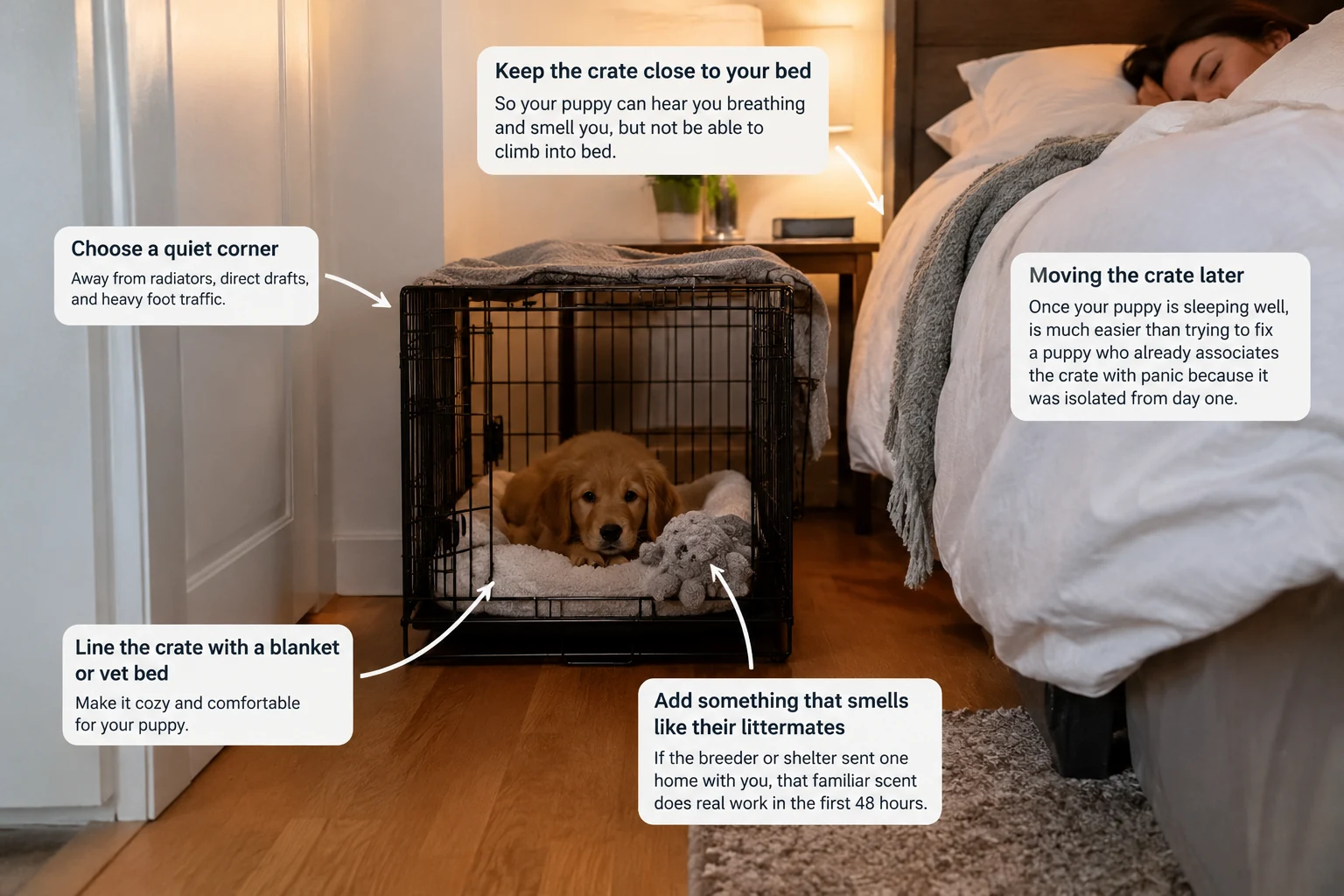
Put the crate in your bedroom, close enough that the puppy can hear you breathing and smell you without being able to climb into bed. This single decision does more to calm a first night than almost anything else on this list, because a puppy's distress at night is largely about sudden isolation from their family, not the crate itself.
Choose a quiet corner away from radiators, direct drafts, and anywhere with heavy foot traffic. Line the crate with a blanket or vet bed, and add one item that smells like their littermates if the breeder or shelter sent one home with you; that familiar scent does real work in the first 48 hours.
Moving the crate to another room later, once the puppy is sleeping well, is far easier than trying to fix a puppy who already associates the crate with panic because it was isolated from day one.
Setting a Real Overnight Toilet Schedule
An 8 to 10 week old puppy typically needs one or two toilet breaks overnight, roughly every three to four hours. Set a quiet alarm for those windows rather than waiting for crying, which trains the puppy that crying is the only way to get your attention, a habit that's far harder to unlearn than it is to prevent.
Keep these breaks boring on purpose: minimal lights, no play, no excited chatting. Walk straight to the toilet spot, wait, praise quietly once they go, and go straight back to the crate. An exciting middle-of-the-night outing teaches a puppy that waking up is fun, which works against everyone's sleep for weeks.
Most puppies need fewer overnight trips by around 14 to 16 weeks as bladder control develops, though this varies by individual and by breed size, with smaller breeds sometimes taking a little longer to catch up.
What to Do When the Crying Starts
A little crying in the first hour or two is common and usually settles on its own. The distinction that actually matters is between brief protest, which tends to fade if you stay calm and consistent, and prolonged, escalating crying, which is more often a genuine need: a full bladder, real cold, or overwhelming loneliness in an unfamiliar place.
Please read first
This article shares general information and lived experience, not individual veterinary or behavioural advice. If you’re concerned about your pet’s health or behaviour, please consult a vet or a qualified professional.
If the crying continues past a few minutes and sounds distressed rather than annoyed, check on the puppy calmly, speak softly, and take them out if it's been a while since the last break. Avoid two extremes that both cause problems later: fully ignoring sustained distress, which can damage a young puppy's early trust, and turning every cry into a cuddle-and-play session, which teaches them that crying reliably produces the best part of their night.
A short, boring, reassuring check, hand near the crate, calm voice, then quiet again, splits the difference well for most puppies during these first two weeks.
Building a Wind-Down Routine Before Bed
Puppies settle faster when the run-up to bedtime is predictable. A short, calm walk or sniff session, a last toilet trip, and 10 to 15 minutes of quiet time before the crate door closes work better than an evening of high-energy play followed by an abrupt lights-out.
Keep the same order every night for at least the first two weeks. Puppies read routines faster than most new owners expect, and a consistent wind-down is one of the clearest signals you can give that night time means rest, not more excitement.
Once your puppy has a few settled weeks behind them, that same calm-before-bed instinct carries over well into daytime energy management too; our guide on keeping a dog busy at home without overstimulating them covers how to apply the same principle once the puppy stage gives way to a more active young dog.
What a Realistic First Week Actually Looks Like
Night one is usually the hardest, with the most crying and the most interrupted sleep for everyone involved. By night three or four, most puppies settle noticeably faster once the crate, the schedule, and the smell of home start to feel familiar rather than strange.
A full night without a toilet break rarely happens before week three or four at this age, and that's completely normal, not a sign anything is going wrong. If sleep hasn't improved at all after two full weeks of a consistent routine, or if crying feels more distressed than settling, it's worth mentioning to a vet, since discomfort or illness can sometimes look like ordinary puppy fussing at first.
For the wider picture beyond these first nights, our Dogs section covers training, feeding, and everyday routines as your puppy grows into the next stage.
Getting the Crate Setup Right, Not Just the Location
Crate size trips up a lot of new owners. Too large, and a puppy will happily sleep at one end and toilet at the other, which defeats the whole point of a crate and works directly against the overnight schedule you're trying to build. Most crates come with a divider panel; use it, and size the usable space just big enough for the puppy to stand up, turn around, and lie down flat, nothing more.
Skip puppy pads inside the crate at this stage, even though they seem like a safety net. Having an acceptable place to toilet indoors, right next to where they sleep, quietly undermines the overnight schedule you've just set up, and it's a habit that takes real effort to unlearn a few weeks later.
For bedding, pick something fully washable, since accidents happen even with a good routine, and avoid anything with loose stuffing or dangling threads that an unsupervised young puppy could chew and swallow overnight. A light blanket draped over part of the crate can mimic the enclosed feel of a den, but leave the airflow and the entrance genuinely open rather than boxing the puppy in completely, especially in a warm room.
Daytime naps affect the night more than most people expect. A puppy who gets no proper rest through the afternoon tends to become overtired by evening, and an overtired puppy is often harder to settle at bedtime, not easier, despite seeming ready to drop from exhaustion. Building in one or two genuinely quiet nap windows during the day tends to pay off directly at lights-out.
Key takeaways
A bedroom crate settles a puppy faster than an isolated one. Scheduled toilet breaks beat waiting for crying, every time. Brief, calm reassurance works better than full ignoring or full play. A predictable wind-down routine matters as much as the crate itself. Real overnight sleep usually improves by week three or four, not night one.
Frequently asked questions
Should a new puppy sleep in my bedroom the first night?
Yes, ideally. A crate beside your bed lets the puppy hear and smell you without full access to the room, which reduces night crying far more reliably than a puppy left alone in another room.
How many times will a puppy need to go out overnight?
For an 8 to 10 week old puppy, expect one or two toilet breaks overnight, roughly every three to four hours. Set a quiet alarm rather than waiting for crying, since a dry crate is easier to maintain than fixing an accident habit later.
Is it okay to let a crying puppy cry it out on the first night?
No, not for a puppy this young. Prolonged crying in an unfamiliar place raises stress hormones and can damage trust early on. Brief, calm reassurance without turning it into playtime works far better than ignoring genuine distress.
Where exactly should the crate go?
Somewhere quiet but not isolated, a bedroom corner away from direct drafts and radiators, with a clear path to the door you'll use for toilet breaks. Avoid busy hallways or rooms with a lot of foot traffic.
How long does it usually take before a puppy sleeps through the night?
Most puppies need fewer overnight breaks by 14 to 16 weeks, once their bladder control catches up. Some get there sooner, some later; consistency in the routine matters more than the exact age.
Want more practical, realistic guidance like this as your puppy grows? Join the Paw Province Letter