
What Accessories Protect a Dog’s Paws
By Paw Province Editorial · Published September 28, 2026
Summary
Paw protection gear falls into three categories that solve different problems: boots for hot or chemically treated ground, balm for dry or cracked pads, and non-slip socks for indoor traction. Buying gear that matches the actual problem beats buying everything at once. Fit and material quality matter more than brand for all three categories. None of them substitutes for checking the ground or the pad itself.
You have probably seen dozens of paw protection products online and no clear sense of which one your dog actually needs. Boots, balms, and non-slip socks get marketed as if they solve the same problem, but they do not, and buying the wrong one wastes money on gear that sits in a drawer. This roundup breaks down what each category is actually good for, what it cannot do, and how to figure out which one matches the issue you are seeing in your own dog.
Boots: For Hot Pavement, Ice, and Rough Terrain
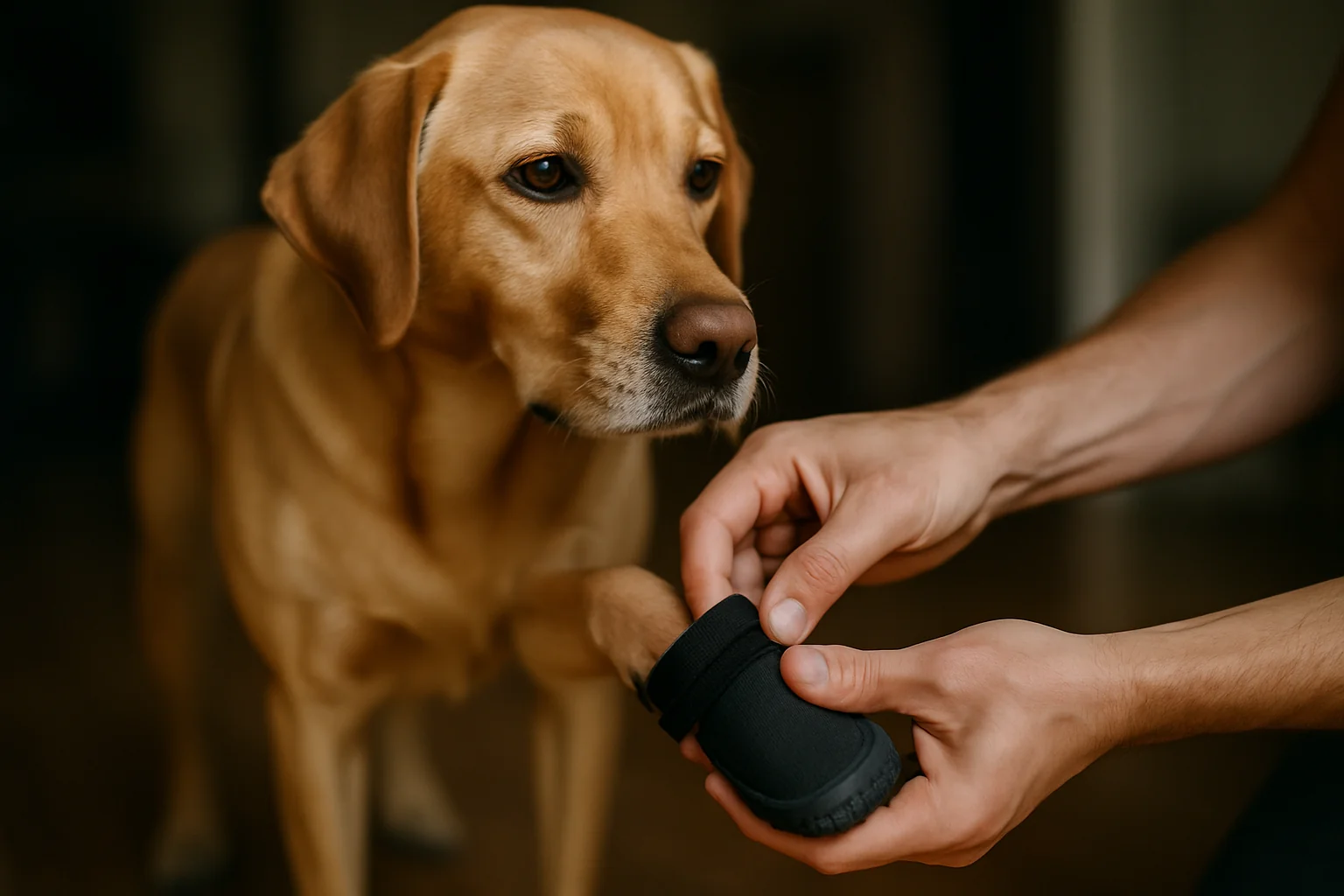
Boots are the only accessory in this group that meaningfully blocks heat transfer from hot pavement, provided the sole is thick enough and made of a dense material like rubber. A thin fabric sole gives only marginal protection, no matter how sturdy the upper looks.
They also matter in winter, protecting pads from de-icing salt and chemical ice-melt that can cause chemical burns and irritation, and on rough or rocky trails where a bare pad is more likely to get cut. Fit is the deciding factor for whether boots actually work: a boot that rotates or slides off within a block offers no protection at all.
Most dogs need a genuine adjustment period before boots feel normal, typically one to three weeks of short sessions rather than a full walk on day one. Our full breakdown on whether dog boots are actually effective against heat covers sole material, sizing, and training timelines in more depth if boots are the accessory you are actually considering.
Paw Balm: For Dryness, Cracking, and Minor Damage
Balm is a moisturising, protective layer rubbed into the pad, not a barrier against heat or cold. It softens pads that have gone dry, flaky, or slightly cracked, and can help a pad recover between walks rather than during them.
It is worth applying at night rather than right before a walk, since a freshly balmed pad can be slightly slick underfoot for a short while. Look for a plain, wax-based formula without added fragrance, since heavily scented products can irritate skin that is already compromised.
Balm is not a substitute for boots on genuinely hot pavement and will not stop a burn from developing. If cracking is already visible and not improving, our guide on what to do about a cracked dog paw pad covers when balm is enough and when it is time to see a vet.
Non-Slip Socks: For Indoor Traction, Not Outdoor Protection
Non-slip socks are thin fabric covers with a grippy sole pattern, designed for dogs skidding on hardwood, tile, or laminate floors, often older dogs or dogs recovering from surgery who need stable footing indoors.
They offer almost no protection outdoors. The sole is too thin to insulate against heat or cold, and the fabric wears through quickly on pavement or gravel. Treating them as a boot substitute for an outdoor summer walk is one of the more common gear mistakes we see.
If the underlying issue is a dog slipping and struggling with mobility rather than paw protection specifically, that is a separate conversation worth having with a vet, since traction alone does not address joint or muscle causes.
Matching the Accessory to the Actual Problem
The fastest way to avoid buying gear that goes unused is to start from the specific problem rather than the product category. Hot pavement in summer calls for boots, not balm. Dry, flaking pads in winter call for balm, not boots. A dog sliding across the kitchen floor calls for non-slip socks, not either of the other two.
Many dogs only ever need one of these three accessories, and layering all three at once rarely makes sense for a single dog's actual routine. If you are unsure where to start, our guide to protecting dog paws in summer covers the full range of seasonal precautions, gear included, in the order most owners actually need them.
Whatever gear you choose, it works alongside basic care rather than replacing it. Our guide on how to do a daily dog paw inspection is worth pairing with any of these three, since spotting a problem early is what actually decides whether balm, boots, or a vet visit is the right next step.
Key takeaways
Boots, balm, and non-slip socks each solve a different problem and are not interchangeable. Boots handle hot pavement, ice, and rough terrain; balm handles dryness and minor cracking; socks handle indoor traction only. Start from the specific problem you are seeing, not from the product category. Fit and material quality matter more than brand across all three. None of them replaces routine paw checks or a vet visit for anything beyond minor issues.
Frequently asked questions
What accessories actually protect a dog's paws?
Three main categories cover most needs: boots for hot pavement or ice-melt chemicals, paw balm for dryness and minor cracking, and non-slip socks for traction on smooth indoor floors. Each solves a different problem, and none replaces the other two.
Do I need boots, balm, or non-slip socks for my dog?
It depends on the problem. Boots suit hot or chemically treated ground, balm suits dry or cracked pads, and non-slip socks suit indoor traction on hardwood or tile. Many dogs only ever need one of the three, not all of them.
Can paw balm replace boots in hot weather?
No. Balm moisturises and softens pads but adds no meaningful barrier against conducted heat from hot pavement. For genuine heat protection, a well-fitted boot with an insulating sole is the only accessory in this category that does the job.
Are non-slip socks the same thing as dog boots?
No. Non-slip socks are thin, indoor-only traction aids for slippery floors and offer no real protection from heat, cold, or rough ground outside. Boots are built with a firmer sole specifically for outdoor conditions.
How do I know which paw accessory is worth buying first?
Match the accessory to the actual problem you are seeing: hot ground calls for boots, dry or flaking pads call for balm, and skidding on indoor floors calls for non-slip socks. Buying based on the specific issue avoids gear that ends up unused.
Want more of this kind of practical, no-fluff guidance as it's published? Join the Paw Province Letter