
Are Dog Boots Effective Against Heat
By Paw Province Editorial · Published September 27, 2026
Summary
Boots only protect against heat when the sole is thick and insulating, not just any boot with a fabric bottom. A secure, non-rotating fit matters as much as the material. Most dogs need one to three weeks of gradual training to accept boots comfortably. High-stepping or freezing on day one is normal, not a sign of a bad fit. Boots are one layer of protection, not a substitute for checking the pavement temperature yourself.
You bought boots hoping they would let your dog walk on hot pavement without worry, and now you are watching them trip, shake a paw, or refuse to move at all. That reaction leaves a lot of owners wondering whether boots actually work against heat or whether they just bought an expensive prop. The honest answer is that some boots genuinely block conducted heat and others barely help, and the difference comes down to sole material, fit, and how the dog was introduced to wearing them. Here is what actually separates the two.
What Makes a Boot Sole Actually Block Heat
Heat moves from hot asphalt into a paw pad through direct contact, the same way a bare foot burns on a summer beach. A boot only interrupts that transfer if its sole is thick enough and made of a material that resists conducting heat quickly.
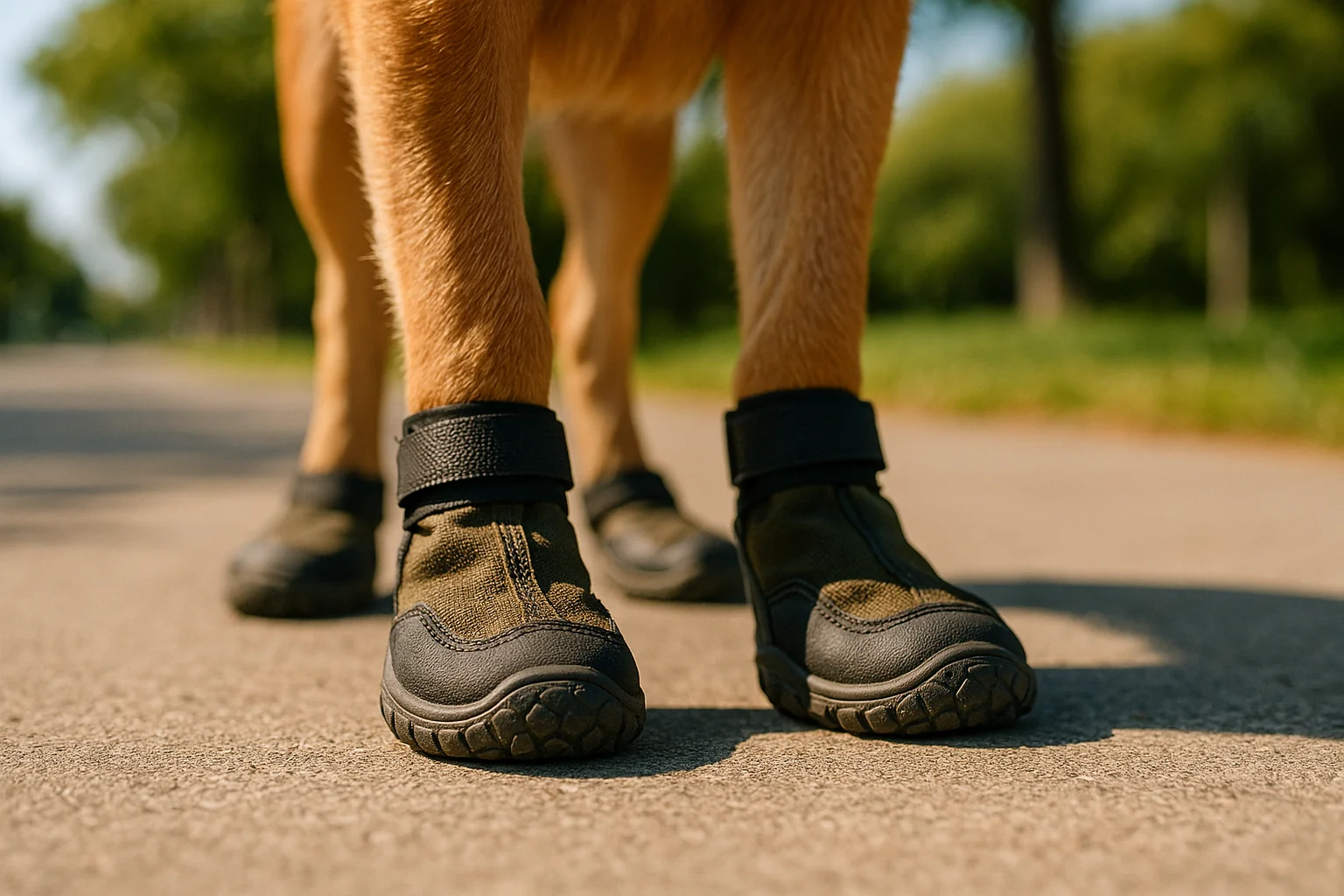
Dense rubber and firm synthetic compounds perform far better here than thin woven fabric or mesh. A sole under two or three millimetres thick, even in rubber, still lets a meaningful amount of heat through on genuinely hot ground within a few minutes of contact.
A breathable upper is comfortable and helps with sweat around the paw, but it does nothing for heat coming from below. When comparing boots, check the sole thickness and material description specifically, not just whether the listing says "protective."
Fit Matters as Much as the Material
A boot with an excellent sole still fails if it slides off, rotates sideways, or gapes at the ankle. A rotating boot exposes the pad to the ground within a few steps, which defeats the entire purpose.
Look for an adjustable closure strap that lets you slide one finger underneath without it feeling loose, and a boot shape that follows the paw rather than a generic tube shape. Reflective or bright boots also help you spot a lost one quickly if it does come off mid-walk.
Sizing dogs is trickier than sizing most gear, since paw width varies more between breeds than paw length does. Measuring the widest part of the paw while the dog is standing and bearing weight gives a more accurate size than measuring a resting paw.
Realistic Acclimation Time, Not Day-One Expectations
Almost every dog looks briefly ridiculous the first time boots go on, high-stepping, shaking each paw, or standing frozen in place. That is a normal reaction to an unfamiliar sensation, not evidence the boots are a bad fit or a bad idea.
A realistic training timeline runs one to three weeks: a few minutes indoors on day one, short supervised sessions with treats and normal movement, then gradually longer indoor time before the first short outdoor walk. Some dogs adapt within days, others take closer to a month, and that range is normal too.
Skipping straight to a full walk on day one is the single most common reason owners give up on boots and conclude the dog "just won't wear them." A slower start usually changes that outcome.
What Boots Do Not Replace
Boots reduce heat exposure, they do not eliminate the need to judge the ground yourself. If you have not already, our guide on how hot ground temperature becomes dangerous for dog paws covers the actual thresholds worth knowing before you plan a summer walk. The back-of-hand test still matters even with boots on, since a boot that slips or wears thin offers no warning on its own.
For a broader look at seasonal paw care beyond boots alone, our guide to protecting dog paws in summer covers timing walks, surface choices, and other precautions that work alongside gear rather than instead of it. And if boots are not the only accessory you are weighing, our roundup of accessories that protect a dog's paws compares boots against balm and non-slip socks for different situations.
Signs a Specific Pair Is Not Working
A boot rotating more than a quarter turn during a normal walk, visible compression marks on the toes after removal, or a dog still limping or favouring a paw after the acclimation period are all signs to size up, size down, or try a different shape rather than push through.
Recheck fit periodically too, particularly after any noticeable weight change, since a boot that fit well in spring can pinch or gape by late summer. If irritation shows up despite a good fit, our guide on treating an irritated dog paw covers what to check before the next walk.
Key takeaways
Sole thickness and material determine heat protection far more than the brand or price of the boot. A secure, non-rotating fit is just as important as the sole itself. Budget one to three weeks of gradual training before a real walk in boots. High-stepping and initial resistance are normal and usually resolve with patience. Boots are one layer of protection, not a replacement for checking ground temperature directly.
Frequently asked questions
Are dog boots actually effective against hot pavement?
Yes, but only boots with a genuinely insulating sole and a secure fit. A thin sole or a boot that slides off within a block gives almost no protection. Fit and sole thickness matter more than the fact that the dog is wearing boots at all.
How long does it take for a dog to accept wearing boots?
Most dogs need 1 to 3 weeks of short, positive sessions to walk normally in boots. A few adjust in days; others need a month. Rushing straight to a full walk on day one is the most common reason boots get rejected.
What sole material actually blocks heat from hot ground?
Rubber and dense synthetic soles with a sole thickness of at least a few millimetres block conducted heat far better than thin fabric or mesh soles. A breathable upper does not compensate for a sole that is too thin to insulate.
Will my dog just refuse to walk in boots?
Some dogs freeze up or high-step at first, which is a normal reaction to an unfamiliar sensation on the paw, not a sign the boots do not fit. Gradual indoor introduction almost always resolves it within a couple of weeks.
How do I know if dog boots fit correctly?
A correct fit lets you slide one finger under the closure strap without it gaping, keeps the boot from rotating on the paw when the dog walks, and does not compress the toes. Recheck fit after any noticeable weight change.
Want more of this kind of practical, no-fluff guidance as it's published? Join the Paw Province Letter