
Why Cats Knead, Chatter, and Do the Things You Do Not Understand
By Paw Province Editorial · Published 28 August 2026
- Kneading, chattering, slow blinking, and loafing are all normal, well-documented cat behaviours, not quirks unique to your cat.
- Kneading and slow blinking both signal comfort and trust; chattering signals predatory frustration, not distress.
- Loafing is a relaxed resting posture, not a sign anything is wrong, unless paired with other changes.
- Context is what separates "normal, don't worry" from "worth watching": a sudden change in an established pattern matters more than any single odd moment.
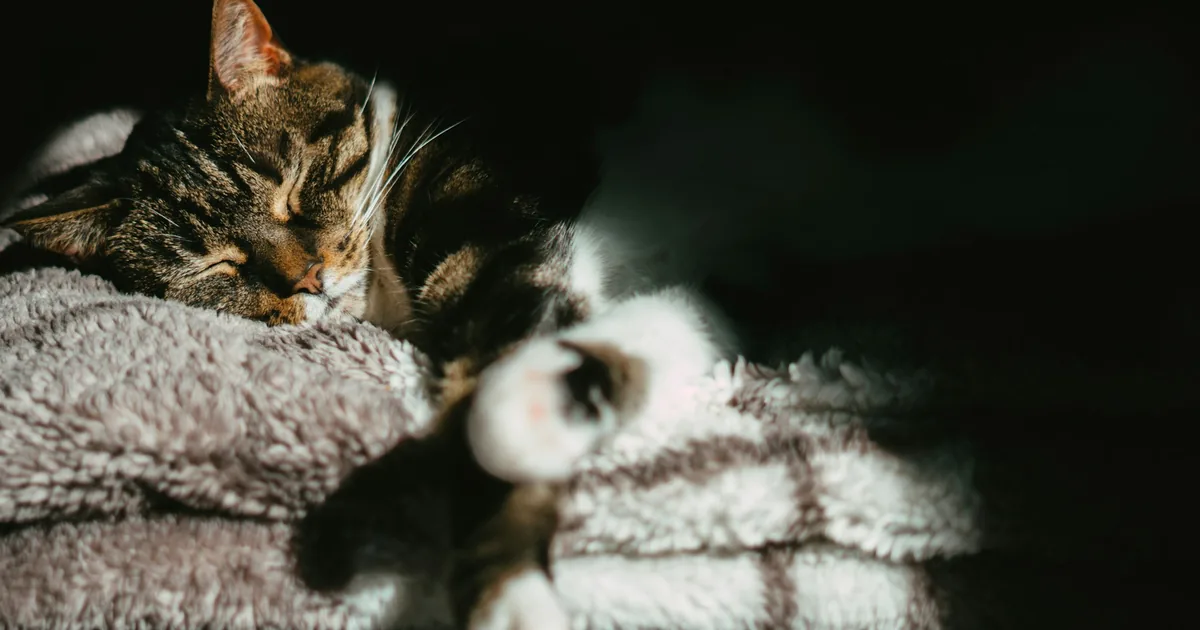
A cat pushes her paws into a blanket, over and over, purring the whole time. Another sits at the window, jaw juddering in a strange rapid chatter, eyes fixed on a bird outside. A third slow blinks across the room and then goes back to loafing, paws tucked neatly under her body like a furry loaf of bread.
Every one of these is completely normal. And every one of them sends a new cat owner straight to a search bar wondering if something is wrong.
Cats communicate constantly, just rarely in ways that map neatly onto human body language. This guide works through the behaviours that come up again and again, what they actually mean, and where the line sits between "totally normal" and "worth watching."
Kneading: The Comfort Behaviour With Kitten Roots
Kneading, the rhythmic pushing motion cats make against a soft surface with their front paws, alternating left and right, traces back to nursing. Kittens knead against their mother's belly to stimulate milk flow, and most cats simply never lose the motion, even though it stops serving that original purpose after weaning.
In adult cats, kneading almost always shows up during moments of comfort: curled on a lap, pressed into a soft blanket, right before settling in to sleep. It's frequently paired with purring and a slightly glazed, contented expression. Some cats also knead with claws extended, which can catch skin or fabric, but the behaviour itself is a sign of relaxation, not aggression or distress.
Chattering at Birds Through the Window
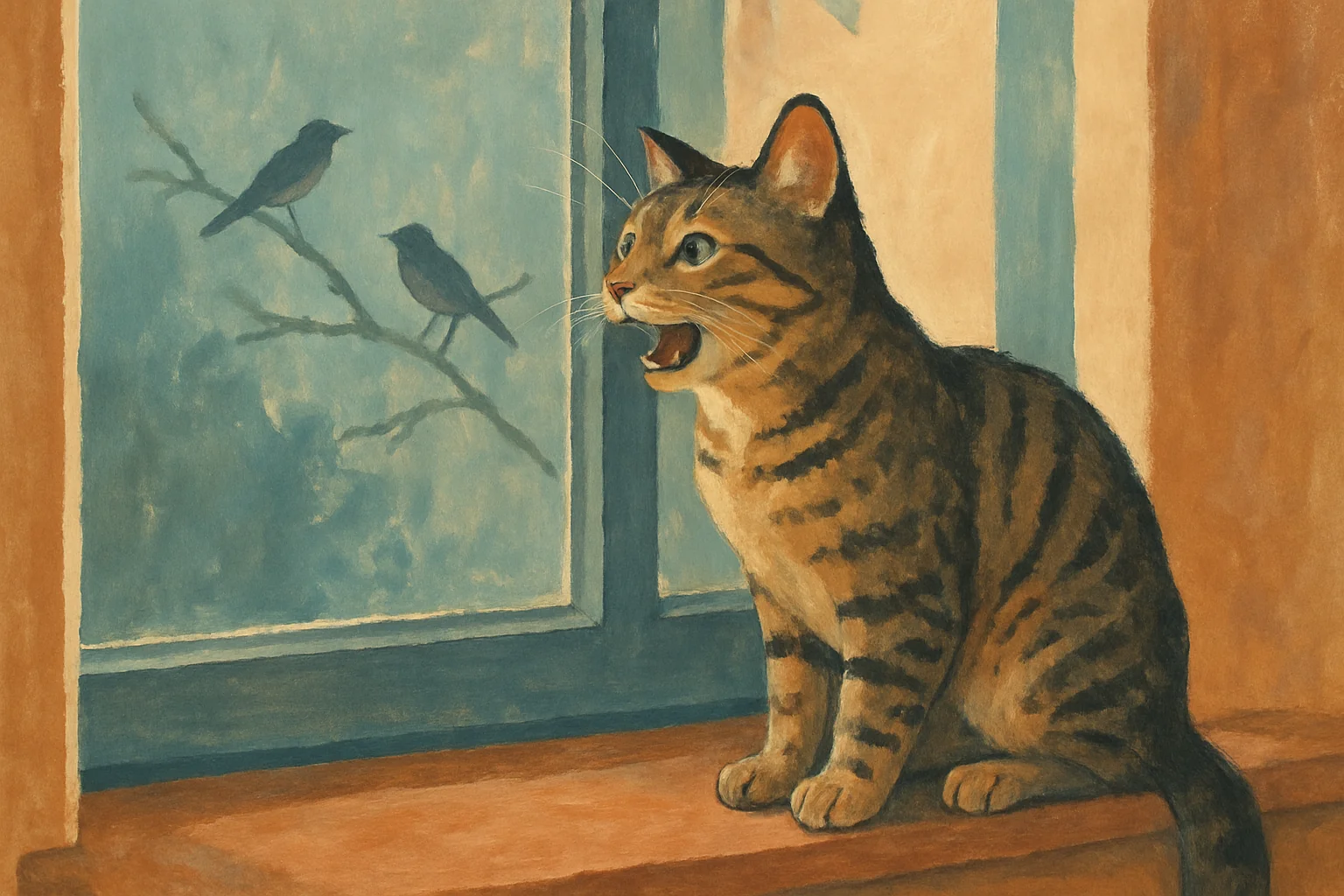
That rapid, chirpy jaw-juddering sound a cat makes while staring intently at a bird or squirrel is called chattering, and it looks alarming the first time you see it up close. The leading explanation among behaviourists ties it to predatory instinct: the cat is watching prey she can see but can't reach, and the chattering reflects a mix of excitement and frustration at that gap.
Some researchers have also linked the specific jaw motion to an imitation of a killing bite, essentially a cat rehearsing the motion in miniature while fixated on target. Either way, chattering is not pain, illness, or a dental problem. It's one of the more reliable signs that a cat's predatory drive is fully switched on, even if the actual prey stays safely on the other side of the glass.
The Slow Blink Is a Real Signal
Few cat behaviours have been studied as directly as the slow blink, and the research backs up what cat owners have believed for years: a slow, deliberate blink, especially paired with a relaxed face and half-closed eyes, is a genuine positive social signal. A 2020 study out of the University of Sussex found cats were more likely to approach a person after that person slow blinked at them, and cats reliably slow blink back at familiar humans.
It works roughly like a small, low-stakes gesture of trust, closing your eyes near another creature is inherently a little vulnerable, so a cat choosing to do it slowly and deliberately, toward you specifically, is a genuinely meaningful gesture in cat terms. Slow blinking back at your cat, especially paired with soft eye contact and a relaxed posture, is one of the simplest ways to build trust with a shy or new cat.
Loafing: Comfort, Not Concern
Loafing describes the classic "cat as a loaf of bread" posture: sitting upright with all four paws tucked neatly underneath the body, tail often wrapped around the front. It's an efficient, comfortable resting position that keeps a cat's core warm while still leaving her reasonably alert and ready to move if needed.
This is one of the most misunderstood postures simply because it looks a little unusual to people. In reality, loafing is a sign of a relaxed, comfortable cat, not a symptom of anything. It becomes worth a second look only if it appears alongside other changes, like reluctance to fully extend a leg, reduced appetite, or noticeably less movement than usual.
Please read first
This article shares general information and lived experience, not individual veterinary or behavioural advice. If you’re concerned about your pet’s health or behaviour, please consult a vet or a qualified professional.
Behaviours Worth Watching, Not Just Noting
The behaviours above are all normal on their own. What actually warrants attention is a sudden change from a cat's own established baseline, not any single behaviour in isolation. A few patterns worth genuinely tracking:
- Overgrooming to the point of bald or irritated patches, which can signal stress, allergies, or pain.
- New hiding that breaks an established pattern, especially combined with reduced appetite or activity.
- A previously reliable cat suddenly avoiding the litter box, which is more often a signal about the box, the household, or discomfort than a behavioural "accident."
- A noticeable drop in normal play or curiosity, sustained over more than a day or two.
The distinction that matters isn't "does this look strange to me," it's "is this different from how my own cat normally behaves." Two cats can have completely different baselines and both be perfectly healthy.
Why Context Changes the Meaning
Nearly every cat behaviour shifts meaning depending on what surrounds it. A slow blink during a calm evening on the sofa means something different from wide, fast blinking during a stressful vet visit. Kneading on a soft blanket at bedtime reads differently from kneading paired with growling over a food bowl. Learning to read a cluster of signals together, body posture, ear position, tail, and the specific situation, gives a far more accurate picture than memorising a list of behaviours in isolation.
A Few More Behaviours Worth Knowing
Beyond the four above, a handful of other everyday behaviours come up often enough to mention. Head bunting, pressing the top of the head or cheek against a person or object, deposits scent from glands in that area and is a genuine bonding and territory-marking gesture, not an accident of positioning. The tail-up greeting, a tail held straight up, sometimes with a slight curl at the tip, while approaching, is one of the clearest friendly greeting signals a cat has, roughly equivalent to a wave hello.
Middle-of-the-night zoomies, sudden bursts of running and playing, usually reflect a crepuscular activity pattern, cats are naturally most active at dawn and dusk, combined with pent-up energy that hasn't had another outlet during the day. And a cat presenting her back to you and sitting close, rather than facing you directly, is often a sign of comfort and trust rather than disinterest, since it means she feels safe enough not to keep watch on you directly.
If you're just settling a new cat in, our guide to bringing a cat home covers the first days when a lot of these behaviours first show up and can look unfamiliar simply because you haven't seen your own cat's normal patterns yet. And if chattering and window-watching are a daily event in your home, our review of indoor cat toys covers ways to give that predatory energy a real, reachable outlet.
Key takeaways
Kneading, chattering, slow blinking, and loafing are all normal cat behaviours with clear explanations behind them. What separates normal from worth watching is a sudden change from your own cat's established pattern, not any single behaviour on its own.
Our Cats section has more guides on everyday feline behaviour and care.
Frequently asked questions
Why does my cat knead me with her paws?
Kneading is a leftover kitten nursing reflex, the same motion kittens use against their mother to stimulate milk flow. Adult cats keep it as a comfort and contentment behaviour, often paired with purring, and it usually means your cat feels relaxed and safe.
Why does my cat chatter at birds through the window?
Chattering, a rapid jaw movement with a chirping sound, is linked to predatory excitement and frustration at not being able to reach visible prey. It is completely normal and is not a sign of pain, illness, or distress.
What does it mean when a cat slow blinks at me?
A slow blink is one of the clearest positive signals a cat gives. It signals comfort and trust, and cats reliably respond to slow blinks from familiar people by blinking back, which is why it is sometimes called a "cat kiss."
Is loafing, sitting with paws tucked under, bad for my cat?
No, loafing is a normal, comfortable resting posture that shows a relaxed cat with muscles at ease. It only becomes worth watching if it appears alongside other signs like reduced appetite, hiding, or reluctance to move.
How do I know if a cat behaviour is normal or a sign of a problem?
Look at whether the behaviour is a new change from your cat's usual pattern, and whether it comes with other signs like appetite changes, hiding, litter box avoidance, or reduced grooming. A sudden shift in a well-established pattern is more worth a vet visit than a single odd moment.