
Do Slow Feeders Actually Slow Dogs Down? An Honest Look
By Paw Province Editorial · Published 1 September 2026

- Slow feeders genuinely slow ingestion speed; puzzle feeders and lick mats mostly solve a different problem, boredom, not raw eating speed.
- A gulping eater who finishes a normal bowl in under a minute is the clearest signal a slow feeder is worth trying.
- Maze-style bowls work fastest but frustrate some dogs; shallow ridge bowls are gentler but slow eating less dramatically.
- None of these fully prevent bloat on their own, they address one contributing factor among several.
Search "slow feeder for dogs" and the results blur together fast: maze bowls, lick mats, puzzle balls, all marketed with roughly the same promise of a calmer, safer mealtime. They are not interchangeable, and picking the wrong one for your actual problem means paying for a product that does not fix what you bought it for.
This is an honest look at what each category of slow feeder actually does, which problem it solves, and which one it does not, so the choice can be based on your dog's specific eating habits rather than the packaging.
The Problem a Slow Feeder Actually Solves
A dog that empties a full bowl in under a minute is gulping, not eating, and that speed carries real risk: swallowed air that leads to gas and discomfort, occasional regurgitation shortly after meals, and in deep-chested breeds specifically, eating speed is one of several contributing factors researchers associate with bloat, a genuine emergency.
A true slow feeder works by adding physical obstacles, ridges, raised sections, or a maze pattern, directly in the path between the dog's mouth and the food, forcing smaller mouthfuls and more frequent pauses. That is a mechanical fix aimed squarely at eating speed, and it is the right tool when speed itself is the problem you are trying to solve.
Comparing the Main Slow-Feeder Types
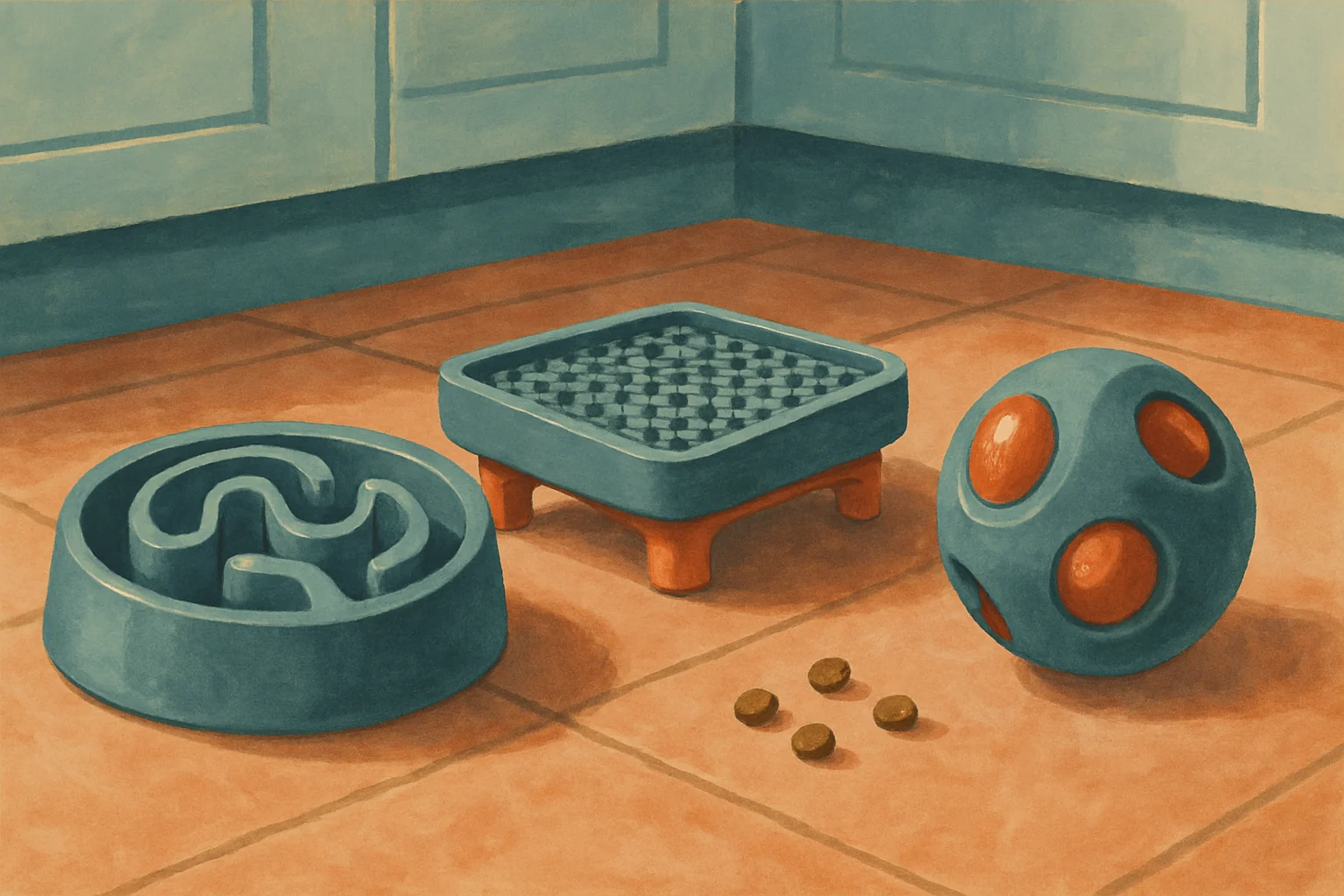
Not every product sold as a "slow feeder" solves the same problem the same way. Here is how the common categories compare.
| Best for | Watch out for | |
|---|---|---|
| Maze-style slow feeder bowl | Fast gulpers who need the strongest, most direct slowdown effect | Can frustrate a dog if the maze pattern is too complex for their size or patience, leading to abandoned meals |
| Raised-ridge slow feeder bowl | Moderate gulpers and dogs new to slow feeding, a gentler introduction | Slows eating less dramatically than a full maze, so a determined gulper may still eat quickly around the ridges |
| Lick mat | Wet food, purees, or frozen mixes, and calming a dog through repetitive licking rather than chewing | Does not really work with dry kibble, and is more of a mental-enrichment tool than a true speed fix |
| Puzzle-ball feeder | Boredom and mental stimulation, especially for dogs who finish meals fast out of understimulation rather than instinct | Slows eating as a side effect of the puzzle, not the primary goal, so it under-delivers for a genuinely fast, food-driven gulper |
None of these four is a universal answer. A maze bowl aimed at a genuine gulper and a lick mat aimed at a bored, understimulated eater are solving two different problems that happen to share a marketing category.
What a Slow Feeder Does Not Fix
It is worth being honest about the limits here, since the marketing rarely is. A slow feeder addresses eating speed. It does not address why a dog eats fast in the first place, which can range from simple habit or breed tendency to competition learned from littermates, anxiety around food, or genuine hunger from an inadequate feeding schedule.
It also does not prevent bloat on its own. Eating speed is one contributing factor researchers have identified alongside others, including deep chest conformation, eating a large meal right before or after vigorous exercise, and genetics. A slow feeder is one reasonable part of a broader prevention approach for at-risk breeds, not a standalone guarantee.
Please read first
This article shares general information and lived experience, not individual veterinary or behavioural advice. If you’re concerned about your pet’s health or behaviour, please consult a vet or a qualified professional.
Choosing the Right One for Your Dog
Start with what you are actually observing at mealtimes rather than the product with the best reviews. A dog who finishes a normal bowl in well under a minute and sometimes regurgitates shortly after needs a genuine slow-feeder design, maze or raised-ridge, not a puzzle toy. A dog who eats at a normal pace but seems bored or under-stimulated during the day benefits more from a puzzle-ball feeder, which solves a different problem entirely.
For deep-chested, bloat-prone breeds specifically, a raised-ridge or gentle maze bowl paired with smaller, more frequent meals and no vigorous exercise right around mealtimes covers more of the real risk than any single product can on its own. For a puppy still learning table manners around littermates, a shallow, simple pattern sized to a small mouth avoids frustrating a young dog who has not yet learned to work with a maze.
Introducing a Slow Feeder Without a Meal Strike
Some dogs adapt to a slow feeder within the first meal. Others, especially confident, food-driven eaters used to a wide-open bowl, get frustrated fast and either give up on the meal or try to tip the bowl over to get around the obstacle entirely. Both outcomes are common enough that they are worth planning around rather than being surprised by.
A gentler introduction usually works better than switching cold. Start with a shallow-ridge design rather than the most complex maze on the shelf, even for a genuine gulper, and let a dog succeed easily for the first few meals before moving to something more challenging. Adding a small amount of warm water or wet food to loosen the kibble in the grooves can also help a frustrated dog work through the pattern in the first few days, then be phased out once they have the hang of it.
Weight the bowl down or choose a design with a non-slip base if tipping becomes the workaround, since a dog who learns to flip the bowl over has effectively defeated the whole point of the exercise. Most dogs settle into a slow feeder within a week of consistent use, and the eating-speed change is usually obvious well before that.
Key takeaways
Match the tool to the actual problem: a true slow feeder for genuine gulping, a puzzle feeder for boredom, a lick mat for calming or wet food. None of these fully prevents bloat alone, and the right choice depends on what you actually observe at mealtimes, not the marketing on the box.
If mealtime speed is part of a bigger routine you are trying to steady, our honest guide to choosing a dog harness uses the same category-by-category comparison approach, and our monthly dog budget breakdown shows roughly where feeding gear fits into ongoing costs.
This page may contain affiliate links in the future. See our affiliate disclosure.
Frequently asked questions
Do slow feeders actually prevent bloat in dogs?
They reduce a genuine risk factor, air gulped while eating too fast, but they are not a guaranteed prevention. Bloat has several contributing causes, including breed, chest shape, and exercise timing around meals, so a slow feeder is one part of a broader prevention approach, not a substitute for the rest.
Is a slow feeder or a puzzle feeder better for a fast eater?
A slow feeder is the more direct fix for the eating-speed problem itself, since it is built specifically to slow ingestion. A puzzle feeder does add mental effort, which can slow eating as a side effect, but it primarily solves a different problem, boredom and understimulation, rather than gulping.
Can slow-feeder bowls cause frustration in some dogs?
Yes, particularly maze-style bowls that are too difficult for a given dog's size or patience level. Watch for a dog who paces, whines, or gives up on meals rather than working through them calmly, and switch to a simpler design or a shallower maze pattern if that happens.
How do I clean a slow-feeder bowl properly?
The raised ridges and mazes that slow eating also trap food residue more than a flat bowl does, so a daily rinse is not enough on its own. Most are dishwasher safe, check the product specifics, and a weekly deeper clean with a bottle brush in the grooves prevents buildup that a quick rinse misses.
Are slow feeders suitable for puppies?
Generally yes, and fast eating is common in puppies competing for food with littermates early on. Choose a shallow, simple pattern sized to a small mouth, since an overly complex maze can frustrate a puppy before they learn to work with it.