
How to Treat an Irritated Dog Paw
By Paw Province Editorial · Published September 17, 2026
TL;DR
Rinse the paw with cool water, pat it completely dry, then apply a thin layer of a pet-safe balm. Keep your dog from licking it off right away by distracting them for a few minutes. Mild irritation usually settles in 2 to 4 days once the trigger is gone. Skip human lotions and anything with fragrance or alcohol. See a vet if the skin breaks, the limping doesn't ease up, or nothing improves after a few days of care.
A red, swollen, or constantly licked paw is unsettling, especially when you can't tell if it's a minor scrape or something that needs a vet visit. Most irritated paws respond well to a simple three-step routine done consistently for a few days, but doing it in the wrong order, or reaching for the wrong product, can drag out healing for weeks. This guide walks through exactly how to clean, soothe, and protect an irritated paw, plus the mistakes that quietly make things worse.
Spot What Kind of Irritation You're Dealing With
Before treating anything, take thirty seconds to actually look at the paw. Redness between the toes, without swelling or discharge, usually points to friction, a mild allergen like grass pollen, or contact with something irritating on a walk. Puffy, warm swelling suggests an allergic reaction rather than simple irritation. A moist, foul-smelling patch between two toes is a different problem entirely, closer to an interdigital infection than surface irritation.
This matters because the treatment differs. Surface irritation responds to cleaning and a barrier balm. Swelling from an allergic reaction, covered in more detail in our guide on recognizing paw swelling caused by an allergy, sometimes needs an antihistamine on a vet's advice rather than just a topical product.
Clean the Paw Before You Treat It
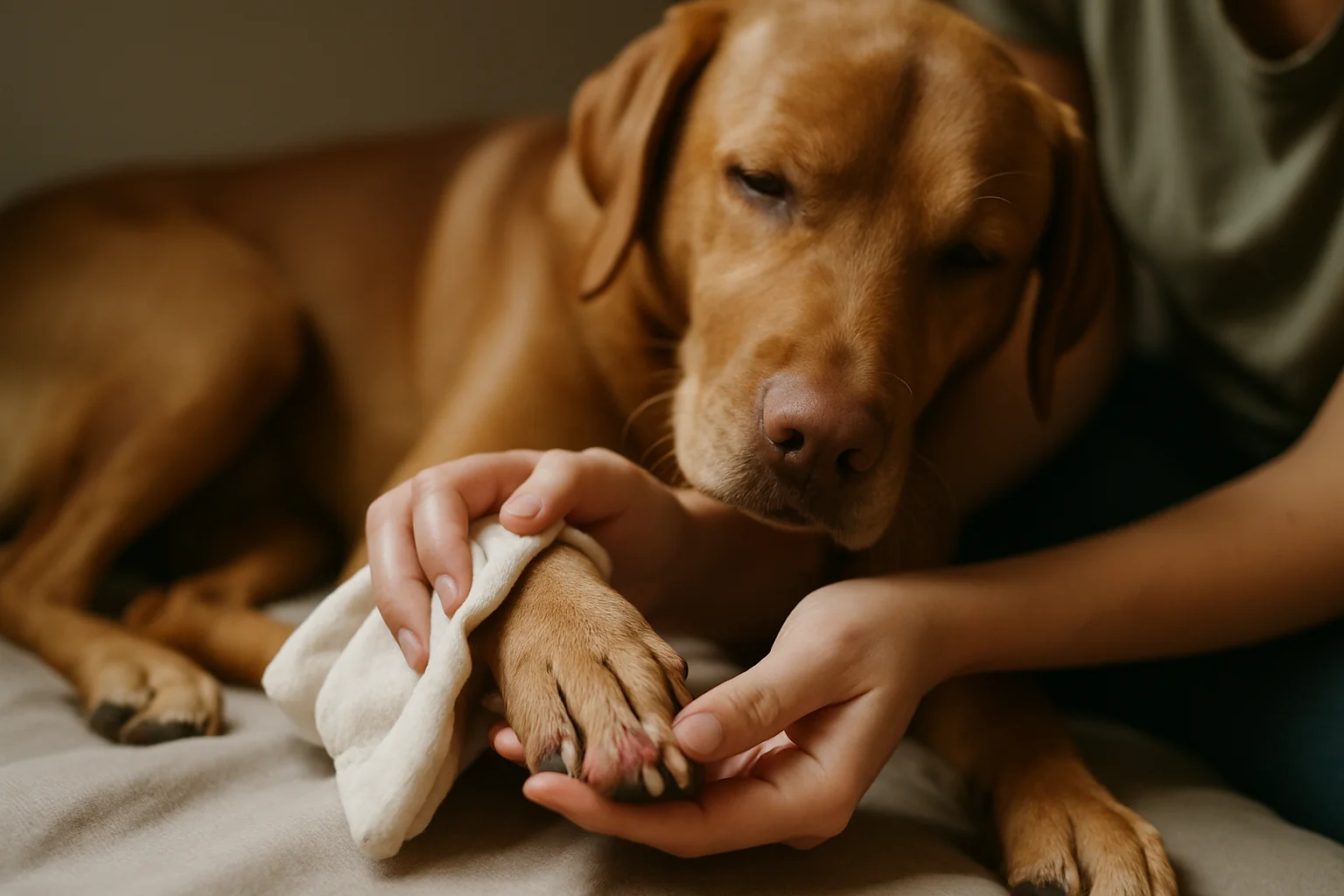
Rinse the paw under cool running water for about thirty seconds, working between each toe with your fingers to flush out dirt, grass seeds, or residue from de-icing salt. Avoid hot water, which can make already-inflamed skin feel worse.
Pat the paw dry with a clean towel rather than rubbing, and spread the toes gently to dry between them fully. Trapped moisture between the toes is one of the most common reasons mild irritation turns into something that smells bad or takes twice as long to clear up.
If your dog is constantly at the paw with their tongue, it's worth understanding why dogs lick at a sore paw in the first place, since the licking itself often does more damage than whatever started the irritation.
Soothe and Protect With the Right Product
Once the paw is clean and dry, a thin layer of a wax-based, pet-safe balm creates a protective barrier and calms surface irritation without the ingredients dogs shouldn't be licking. Apply it with a clean finger, working it lightly into the pads and between the toes, then keep your dog occupied for five to ten minutes so it has time to absorb.
Not every balm on the shelf is built for this. Our breakdown of what to actually look for in a paw cream covers the difference between a genuine barrier balm and products that are mostly marketing.
Please read first
This article shares general information and lived experience, not individual veterinary or behavioural advice. If you’re concerned about your pet’s health or behaviour, please consult a vet or a qualified professional.
Mistakes That Quietly Slow Healing Down
The most common mistake is applying a product to a paw that's still damp, which traps moisture under the balm instead of sealing it out. A close second is reaching for a human hand cream or petroleum jelly meant for people, since dogs lick it off within minutes and some ingredients aren't meant to be swallowed.
Skipping the drying step between the toes is another frequent one. It looks minor, but a paw that's cleaned and treated while still wet between the toes often takes twice as long to settle down, because the skin never gets a real chance to recover between applications.
Over-bandaging is a less obvious mistake. A paw wrapped too tightly, or left wrapped for days without checking underneath, can trap heat and moisture just as badly as skipping the drying step entirely.
When Irritation Signals Something Bigger
Most irritated paws are a short-term nuisance, not a medical emergency. That said, some signs point to a problem home care won't fix. Broken skin, a strong odor, visible limping, or irritation that keeps coming back on the same paw after it clears up are all reasons to stop treating it at home and get it looked at. Our guide on when a paw problem needs a vet visit lays out the specific signs worth acting on.
A Realistic Healing Timeline
For simple surface irritation caused by a one-off allergen or friction, expect visible improvement within 2 to 4 days of consistent cleaning and balm application. Persistent redness caused by a recurring allergy, or irritation that a dog keeps re-aggravating by licking, can take a week or longer to fully settle, especially if the underlying trigger hasn't been removed from the environment. If nothing has changed after four or five days of proper care, that's the point to involve a vet rather than keep waiting it out. For everyday paw maintenance once this episode clears up, our Dogs section covers cleaning, drying, and inspection routines that help prevent the next flare-up.
Key takeaways
Clean, dry, then treat, always in that order. A thin layer of pet-safe balm beats any human product, every time. Trapped moisture between the toes is the most common reason irritation lingers. Mild cases settle in 2 to 4 days; anything longer or worsening deserves a vet's opinion. Watch for broken skin, limping, or repeat flare-ups on the same paw.
Frequently asked questions
How do you treat an irritated dog paw at home?
Rinse the paw with cool water to remove dirt or allergens, pat it fully dry, then apply a thin layer of a dog-safe balm to calm the skin. Keep your dog from licking it off for at least ten minutes, and recheck the area daily until the redness fades.
How long does an irritated dog paw take to heal?
Mild irritation from a short-term allergen or friction usually improves within 2 to 4 days once the trigger is removed and the paw stays clean and dry. Irritation from a recurring allergy or skin condition can take a week or more, especially if licking continues.
Can I put human hand cream on my dog's paw?
No. Most hand creams contain ingredients dogs shouldn't ingest, and a dog will almost always lick a paw right after you apply something to it. Stick to a balm labeled safe for pets, ideally one without added fragrance.
Why does my dog keep licking the irritated paw?
Licking is a dog's default response to itching, pain, or a foreign substance on the skin, and it often makes the irritation worse by keeping the area damp. A properly applied balm and, in persistent cases, a barrier like a sock or e-collar can break the cycle.
When should an irritated paw be checked by a vet?
See a vet if the redness spreads, the skin breaks or oozes, your dog is limping, or there's no improvement after 3 to 4 days of home care. Recurring irritation on the same paw can also point to an allergy worth investigating.
Want more practical, no-nonsense paw care guidance like this? Join the Paw Province Letter