
Choosing the Right Puppy Food by Life Stage (Without the Marketing Noise)
By Paw Province Editorial · Published 27 August 2026
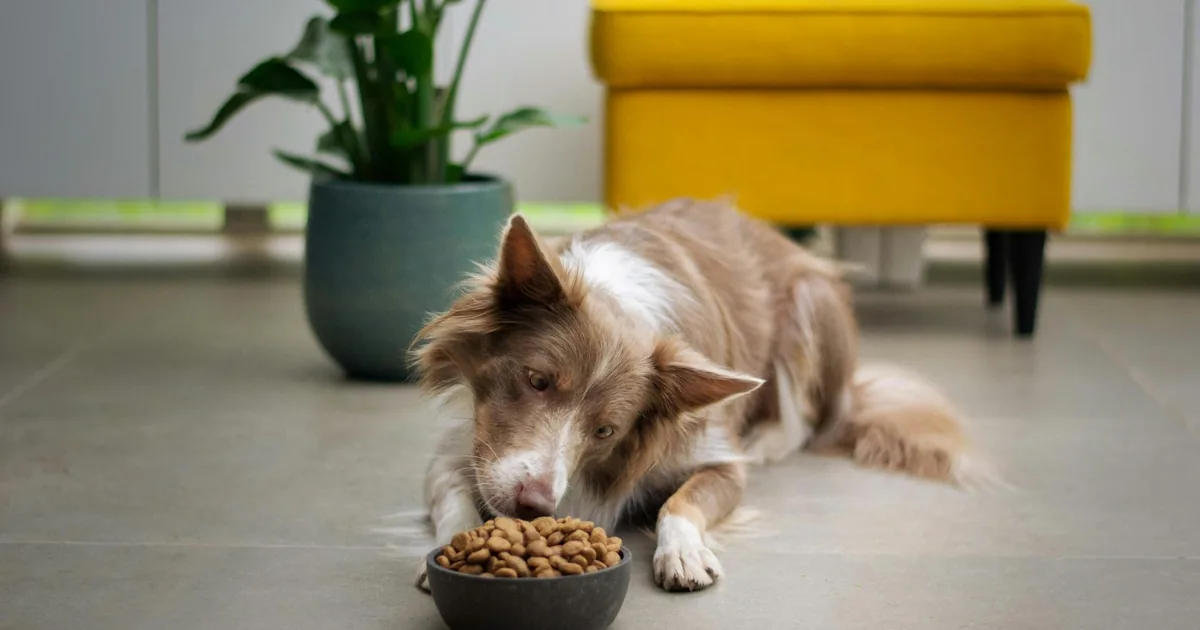
- "Life stage" on a label refers to a real regulated nutrient profile (AAFCO or FEDIAF), not just marketing language.
- Large and giant breed puppies need growth to be deliberately slowed through controlled calcium and calorie density; small breeds don't have the same requirement.
- When to switch to adult food depends on expected adult size, not a fixed birthday.
- Grain-free is a marketing category, not a health upgrade, and it comes with an open question around heart disease risk.
- A puppy food's price and portion size affect your monthly pet budget more than most owners plan for upfront.
The puppy food aisle is built to overwhelm. Grain-free, breed-specific, "vet formulated," large breed, small breed, salmon, lamb, a dozen bags all claiming to be the obviously correct choice, priced anywhere from budget to eye-watering.
Most new owners end up picking based on the bag that looks most premium, or whatever a friend mentioned once, because actually parsing the label feels like it needs a nutrition degree. That guesswork isn't harmless. A large breed puppy on the wrong calorie load can grow too fast for his own joints, and a small breed puppy on an adult-calorie-density food can end up underfed relative to his tiny stomach.
This guide breaks down what life-stage formulation actually controls for nutritionally, what size-specific feeding really changes, and when to make the switch to adult food, without repeating whatever a bag's front label wants you to believe.
What "Life Stage" Actually Means on a Label
In the US, pet food labels are governed by AAFCO nutrient profiles; in the EU and UK, the equivalent body is FEDIAF. Both define specific nutrient minimums and maximums for "growth" (puppies), "adult maintenance," and "all life stages," which is formulated to meet the more demanding growth requirements so it works for both.
A food carrying a growth or all-life-stages statement has been formulated, or tested through feeding trials, to meet a puppy's higher protein, fat, and mineral needs relative to an adult dog of the same size. This is the one label detail that actually matters more than the marketing copy around it. Look for the specific AAFCO or FEDIAF statement, usually in small print near the guaranteed analysis panel, rather than trusting a puppy illustrated on the front of the bag.
Large Breed Puppy Formulas Are Not Marketing Fluff
This is the one size-specific claim genuinely backed by real nutritional science. Large and giant breed puppies, generally those expected to reach over roughly 25 kilograms as adults, are at meaningfully higher risk of developmental orthopaedic problems, including hip dysplasia and osteochondrosis, when they grow too quickly.
Large breed puppy formulas address this in two specific ways: controlled calcium and phosphorus levels, kept within a tighter ratio and range than a standard puppy food, and moderated calorie density, so the puppy grows steadily rather than in a rapid early spike. This is not about restricting a puppy's ultimate size, it's about controlling growth rate, which is the actual risk factor for skeletal problems in large breeds.
Small and Toy Breed Puppies Have Different Needs
Small and toy breed puppies face close to the opposite issue. They have proportionally tiny stomachs and very high metabolic rates relative to their body size, and are genuinely at risk of hypoglycaemia, low blood sugar, if underfed or fed infrequently in their first few months.
Small breed puppy formulas are typically more calorie-dense per gram and made with smaller kibble pieces sized for tiny mouths. Frequent small meals, often three to four times a day well into the first several months, matter more for these breeds than for a large breed puppy who can comfortably handle two meals a day from early on.
Please read first
This article shares general information and lived experience, not individual veterinary or behavioural advice. If you’re concerned about your pet’s health or behaviour, please consult a vet or a qualified professional.
When to Switch From Puppy to Adult Food
There is no single correct age. The right time to switch tracks expected adult size, because that's what determines how long a dog is still actively growing.
- Small breeds (under roughly 10kg adult weight): often ready around nine to twelve months.
- Medium breeds: typically around twelve months.
- Large breeds: usually not until fifteen to eighteen months.
- Giant breeds: sometimes not until eighteen to twenty-four months, since their growth plates close later.
When the time comes, transition gradually over seven to ten days, mixing increasing proportions of the new food into the old, to avoid digestive upset. A sudden full swap is the most common cause of a puppy getting an upset stomach during a food change that was otherwise perfectly reasonable.
Grain-Free: What the Marketing Claim Actually Means
"Grain-free" describes an ingredient exclusion, not a nutrition standard, and it isn't inherently healthier. Most dogs digest grains like rice, oats, and barley without any issue, and grains contribute usable carbohydrate energy and fibre to a balanced formula.
There's also a genuine open question worth knowing about: US regulators investigated a possible association between certain grain-free diets, particularly those heavy in peas, lentils, and other legumes as primary ingredients, and a form of heart disease called dilated cardiomyopathy in dogs without a typical genetic predisposition. The science isn't fully settled, but it's enough reason not to choose grain-free by default on the assumption it's automatically the premium or healthier option. If you're comparing specific grain-free and private-label options at a given retailer, our breakdown of what PetSmart actually carries by category applies this same label-first approach to a real shelf.
Reading an Ingredient List Without Falling for Tricks
Ingredients are listed by pre-cooking weight, which creates a common illusion: "fresh chicken" listed first looks great, but fresh meat is roughly 70% water, so once cooked and processed it may contribute less actual protein than a named meat meal listed second or third. A named meal, like "chicken meal," is already concentrated and is not automatically a lower-quality ingredient just because it sounds less appealing.
What's worth checking instead: a named protein species rather than a vague "meat" or "animal" source, a clear life-stage statement, and consistency, meaning the formula isn't being reformulated constantly in ways that make it hard to know what you're actually feeding week to week.
The "guaranteed analysis" panel on the back is more useful than most owners realise. It lists minimum crude protein and fat, and maximum crude fibre and moisture, as percentages. For a growing puppy, protein in the high-twenties to low-thirties percent range, on a dry-matter basis, is typical for a quality growth formula. These are minimums and maximums, not the exact recipe, but they're a far more reliable comparison point across brands than the marketing claims printed elsewhere on the same bag.
How Feeding Trials Differ From Formulation
Look closely at the AAFCO or FEDIAF statement and you'll often see one of two phrasings: the food was "formulated to meet" the nutrient profile, or it "passed a feeding trial" for that life stage. A feeding trial is the stronger claim, since it means the specific formula was actually fed to real dogs over a set period and monitored for outcomes, not just calculated on paper to hit the right nutrient targets. Neither guarantees a food is the right fit for your specific puppy, but a feeding-trial statement is a small extra signal of real-world testing behind the formula, worth a slight edge when two foods otherwise look comparable.
Budgeting for a Growing Puppy
Puppy food is one of the costs new owners most often underestimate, both because puppies eat proportionally more relative to their size than adult dogs and because a large breed puppy can go through a genuinely large volume of food during peak growth months. If you haven't mapped out what a dog costs month to month beyond the food bowl, our guide to the monthly cost of owning a dog is worth reading alongside this one, especially before committing to a premium large-breed formula on a tight budget.
If you're also still working through the basics of a puppy's first weeks at home, settling a puppy in for the first night covers the other side of those early months, sleep and routine, that tends to matter just as much as what's in the bowl.
Key takeaways
Life-stage formulation is a real, regulated nutrient standard, not just marketing. Large breed puppies need controlled growth rate through calcium and calorie management; small breeds need frequent, calorie-dense meals. Switch to adult food based on expected adult size, and treat grain-free as a category, not an automatic upgrade.
Our Dogs section has more practical guides on feeding, training, and everyday life with a dog.
Frequently asked questions
When should I switch my puppy from puppy food to adult food?
It depends on expected adult size, not a fixed age. Small breeds can usually switch around nine to twelve months, medium breeds around twelve months, and large or giant breeds often need puppy or large-breed growth food until eighteen to twenty-four months.
Is grain-free puppy food better for my dog?
Not automatically. Grain-free is a marketing category, not a nutritional standard, and grains are not inherently harmful to most dogs. Regulators have also investigated a possible link between certain grain-free formulas and heart disease, so grain-free is not a default upgrade.
Do large breed puppies really need a different formula?
Yes. Large and giant breed puppy formulas control calorie density and calcium-to-phosphorus ratio to slow growth to a safer rate, which reduces the risk of skeletal problems. This matters far more for big breeds than for small ones.
What does "complete and balanced" on a puppy food label actually mean?
It means the food meets a recognised nutrient profile, typically AAFCO in the US or FEDIAF in Europe, for a specific life stage. Look for the life stage named explicitly as "growth" or "all life stages" on the label, not just implied by puppy imagery.
How do I know if a puppy food ingredient list is actually good quality?
Look past the first ingredient alone. Named meat meals are concentrated protein sources and are not automatically worse than fresh meat, which is mostly water by weight. Check for a named protein species, a life-stage statement, and consistency, not just a short, appealing list.