How to Read Dog Body Language: The Everyday Signals, Not the Exotic Ones
By Paw Province Editorial · Published 26 August 2026
- Most "misbehaviour" is actually a dog communicating discomfort through small, easy-to-miss signals long before anything dramatic happens.
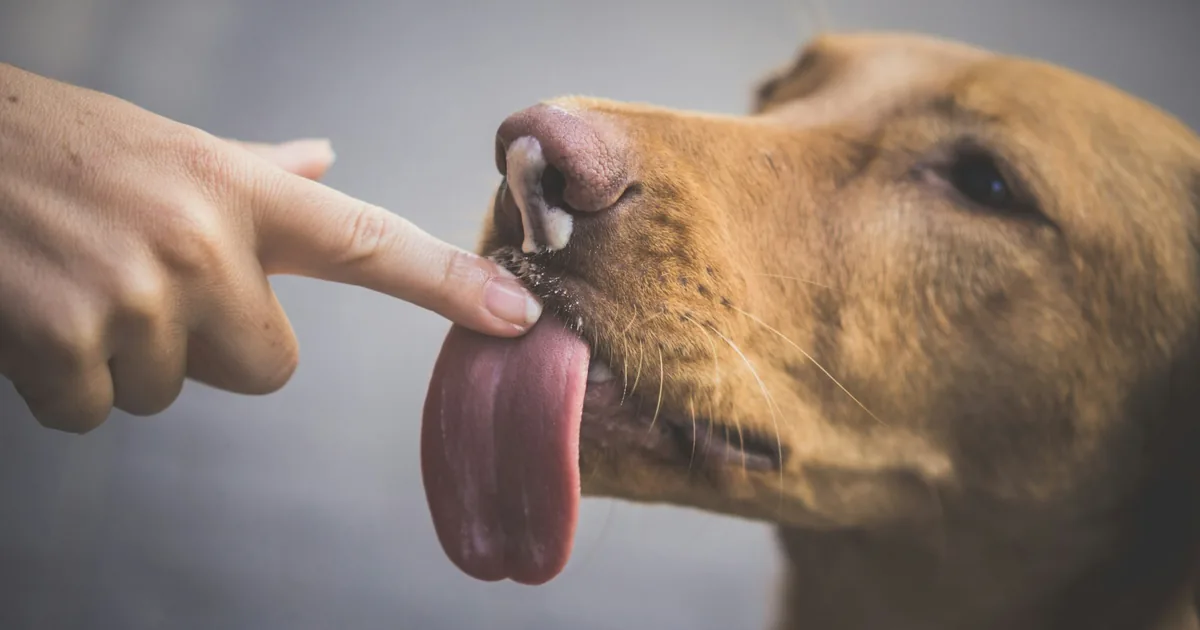
- Lip-licking outside of mealtimes, out-of-context yawning, and whale eye are three of the most commonly overlooked stress signals.
- A wagging tail is not automatically a happy tail; height, speed, and stiffness change what it means.
- A growl is information, not a behaviour to punish away.
- Reading the whole dog, in context, beats fixating on any single body part.
A dog freezes when a toddler leans in for a hug. Another turns his head away and licks his lips when a stranger reaches down to pet him. A third yawns twice during a nail trim that hasn't even started yet. None of these dogs are being difficult, stubborn, or badly behaved.
They are talking. Most owners just never learned the language.
The dramatic signals, snarling, snapping, a full-body freeze before a bite, get all the attention because they're impossible to miss. But dogs almost always try the quiet version first. This guide walks through the everyday signals that come before the obvious ones: the ones owners most often misread as stubbornness, excitement, or nothing at all.
What Calming Signals Actually Are
The term "calming signals" comes from Norwegian trainer Turid Rugaas, who spent years cataloguing the small behaviours dogs use to defuse tension, in themselves and in whoever they're interacting with. The idea isn't exotic. Dogs are a highly social species descended from animals that needed ways to avoid unnecessary conflict, and calming signals are the toolkit that evolved for exactly that.
A calming signal can be directed at another dog, a person, or even used to self-soothe with no audience at all. The mistake most owners make isn't ignorance that these signals exist, it's assuming a signal only counts if it looks obviously nervous. A yawn during a car ride, a slow blink during a cuddle, a shake-off after being picked up: these register as random quirks rather than as a running commentary on how the dog is actually feeling in that moment.
The Signals Owners Miss Every Day
A handful of behaviours show up constantly in ordinary households and get explained away almost every time.
- Lip-licking with no food around. A quick tongue flick when nothing has just been eaten is one of the most common low-level stress signals, often triggered by a hug, a direct stare, or a vet reaching for a stethoscope.
- Yawning out of context. A yawn during a stressful grooming session or a tense greeting between dogs is not tiredness, it's self-soothing.
- Turning the head or body away. A dog that angles his body sideways or turns his head while still standing near you is quietly asking for a beat of space, not being aloof.
- The single paw lift. Common in nervous or uncertain dogs, especially during an unfamiliar interaction, and easy to mistake for a trained "shake" cue offered spontaneously.
- Shaking off with no water or dirt involved. A full-body shake after a tense moment, a vet visit, an awkward greeting, is a released-tension behaviour, almost a physical reset button.
None of these signals mean a dog is in danger of biting. They mean a dog is mildly uncomfortable and is asking, politely, for the situation to change. Responding early, by backing off, slowing down, or giving space, is what keeps a mild signal from needing to escalate into a louder one.
Tail Wagging Is Not One Signal
"His tail was wagging" is one of the most common things said right before someone gets nipped, and it's not because the dog was lying. It's because a wag communicates arousal, not a fixed emotion, and arousal can be happy, anxious, or aggressive depending on everything else going on in the dog's body at the same time.
A loose, low-to-mid height wag that moves the whole rear end, sometimes called a "helicopter tail," is the closest thing to a genuinely relaxed, friendly signal. A tail held high and stiff, wagging in short, fast strokes, usually signals high arousal that could tip either way. A tail tucked tight against the body signals fear or submission. Speed and height matter more than the simple fact of movement.
Whale Eye and the Hard Stare
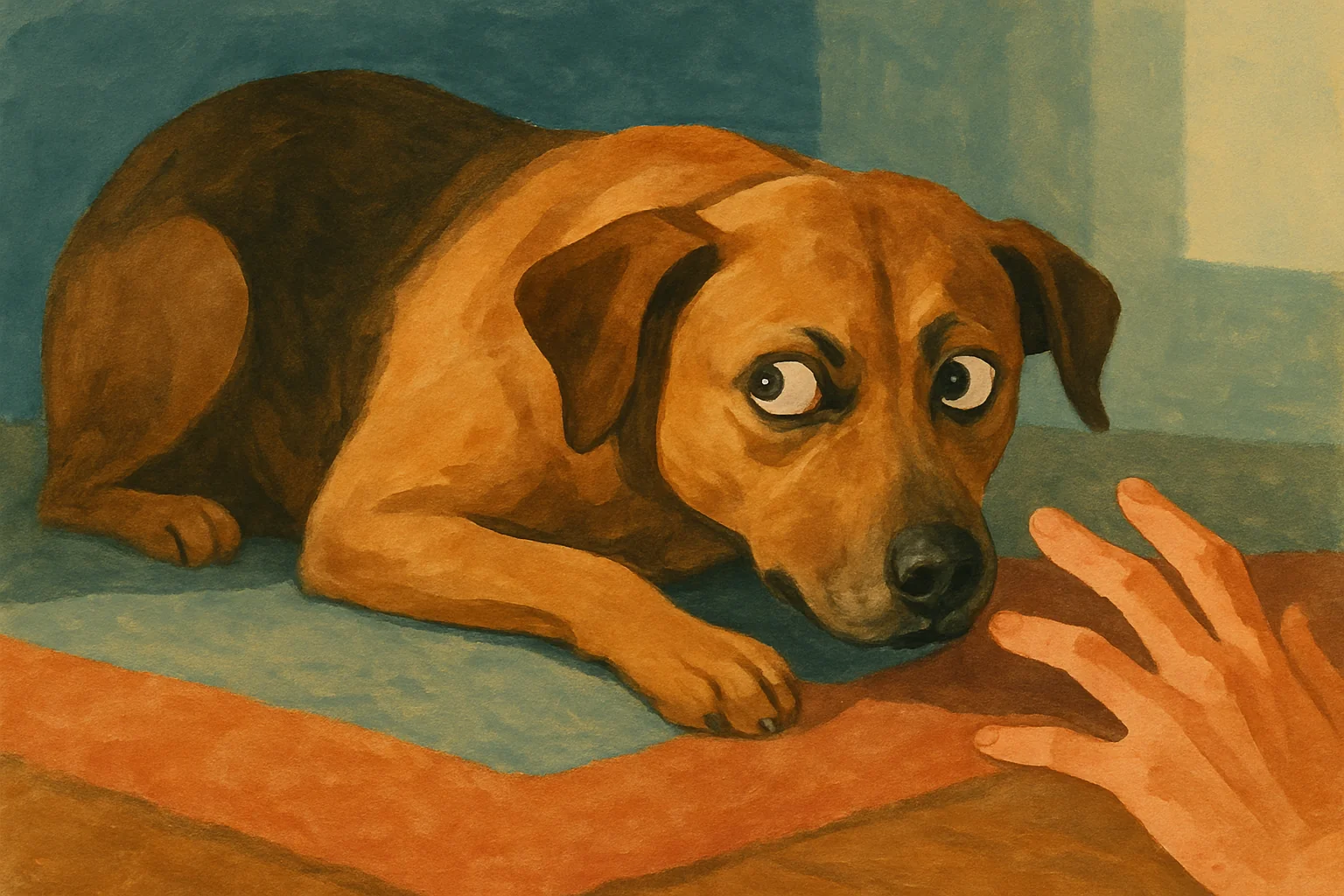
Whale eye is the name for the crescent of white that becomes visible at the corner of a dog's eye when he turns his head away from something but keeps his eyes locked on it. It's an easy signal to spot once you know to look for it, and it almost always means the dog wants distance from whatever he's side-eyeing, whether that's a hovering hand, an unfamiliar dog, or a child moving in too fast.
A hard, direct stare is a different signal worth knowing too. Prolonged, unblinking eye contact, especially paired with a stiff, still body, is a warning posture in dog communication, closer to a challenge than a friendly gaze. A relaxed dog tends to blink normally and glance away periodically; a dog fixated and unmoving is telling you the situation has his full, tense attention.
Please read first
This article shares general information and lived experience, not individual veterinary or behavioural advice. If you’re concerned about your pet’s health or behaviour, please consult a vet or a qualified professional.
Reading the Whole Dog, Not One Body Part
Any single signal on its own can be ambiguous. A yawn during a lazy Sunday afternoon means nothing. The same yawn appearing alongside lip-licking, a lowered head, and a tucked tail during a nail trim is a clear cluster telling you the dog is well past just mildly uncomfortable.
This is where a lot of well-meaning owners go wrong: they wait for one unmistakable signal instead of noticing a pattern building across several smaller ones. A useful habit is to scan three areas together: the ears (forward and alert, or pinned back), the tail (height, speed, stiffness), and the overall body weight (leaning in, or shifted back and away). Reading those three together, in the context of what's actually happening around the dog, gives a far more reliable read than fixating on any one part.
When Signals Escalate: The Growl
A growl sits further along what trainers call the "ladder of aggression," a sequence of escalating warnings a dog moves through when earlier, quieter signals get missed or ignored. Lip-licking, turning away, and whale eye typically come first. If those go unnoticed, a stiff body and a hard stare often follow. A growl usually comes only after several of those earlier signals have already been tried.
Punishing a growl, telling a dog off or correcting him for making the sound, removes the warning without addressing why it was given. A dog that learns growling gets punished doesn't necessarily become calmer; he often just skips the warning next time, which is the opposite of what anyone actually wants. The better response to a growl is to figure out what triggered it and address that, not to silence the messenger.
Where This Matters Most, Day to Day
These signals come up constantly in situations that feel completely ordinary. A young puppy adjusting to a new home is especially prone to showing subtle stress signals during those first overwhelming nights, and our guide to a puppy's first night at home covers how to set up that early period so a puppy doesn't need to lean on those signals as often. In multi-pet households, a dog meeting a resident cat for the first time will often show a string of these exact signals, and introducing a dog and a cat walks through pacing an introduction around them rather than pushing through.
Vet visits, greetings with unfamiliar dogs, kids who don't yet know how to read a stiffening body, and grooming sessions are the other recurring flashpoints. In every one of them, catching the early, quiet signals and responding to them, rather than waiting for something louder, is what keeps a manageable moment from turning into a genuinely stressful one for everyone involved, dog included.
Key takeaways
Dogs signal discomfort long before growling or snapping, through lip-licking, out-of-context yawning, whale eye, and a stiff, high tail. Read these signals as a cluster, in context, rather than in isolation, and respond to the early, quiet ones so they never need to escalate into louder ones.
Our Dogs section has more practical guides on everyday behaviour and training if you want to keep building on this.
Frequently asked questions
Is a wagging tail always a sign my dog is happy?
No. A loose wag at mid-height, moving side to side with the whole rear end, usually means friendly. A stiff, high, fast wag often means arousal or tension, which can tip into excitement or aggression. Watch the whole body, not just the tail.
My dog yawns a lot around new people. Is that just tiredness?
Sometimes, but an out-of-context yawn, one that happens during a greeting or a stressful moment rather than after waking up, is often a calming signal. Your dog is trying to self-soothe or defuse tension, not signalling boredom.
What should I do if I see whale eye?
Give your dog space and remove whatever is causing the stress, whether that is a hug, a reaching hand, or a crowding child. Whale eye means your dog is uncomfortable and asking for room, not asking to be reassured with more contact.
Is it true I shouldn't punish a growl?
Correct. A growl is a warning your dog is choosing to give instead of skipping straight to a bite. Punishing it teaches a dog to stop warning, not to stop feeling threatened, which makes future bites harder to predict.
How can I tell calming signals from normal excitement?
Context and clustering matter most. One yawn during play is probably nothing. A yawn plus lip-licking plus a stiff body during a vet exam is a cluster of stress signals appearing together, which is a much clearer message than any single behaviour alone.