
Cracked Paw Pad in Dogs: What to Do
By Paw Province Editorial · Published September 18, 2026
TL;DR
Clean a cracked pad gently, keep it dry, and apply a wax-based balm to stop the tissue drying out further. Cut back on rough walks and hot pavement until the crack visibly closes. Shallow cracks heal in 1 to 2 weeks; deeper ones can take 3 to 4. Bandage only if it's bleeding or exposed to dirt, and keep the wrap loose. See a vet for a deep split, a limping dog, or a crack that reopens repeatedly.
A cracked paw pad looks small but rarely feels small to the dog walking on it. It's the kind of thing owners notice mid-walk, a slight limp or a paw held up for a second too long, and then spend the evening wondering whether it needs a vet or just a bit of care at home. Most cracked pads heal well with the right routine, but the wrong response, walking on it as normal or ignoring it entirely, can turn a one-week problem into a month-long one.
How to Tell a Cracked Pad From Normal Wear
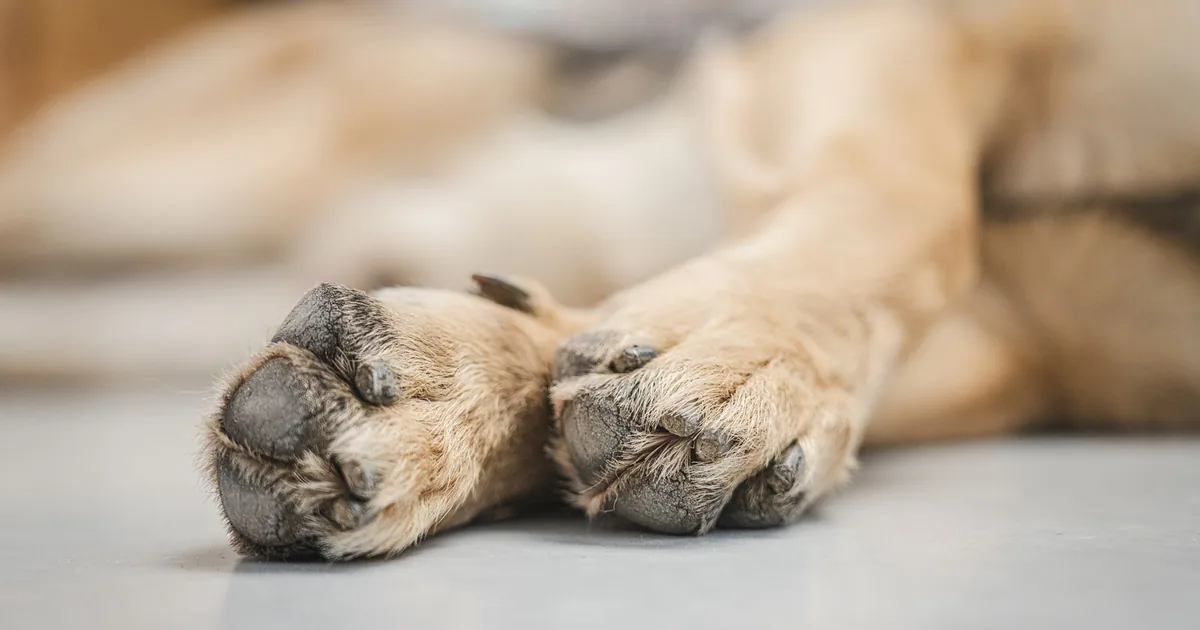
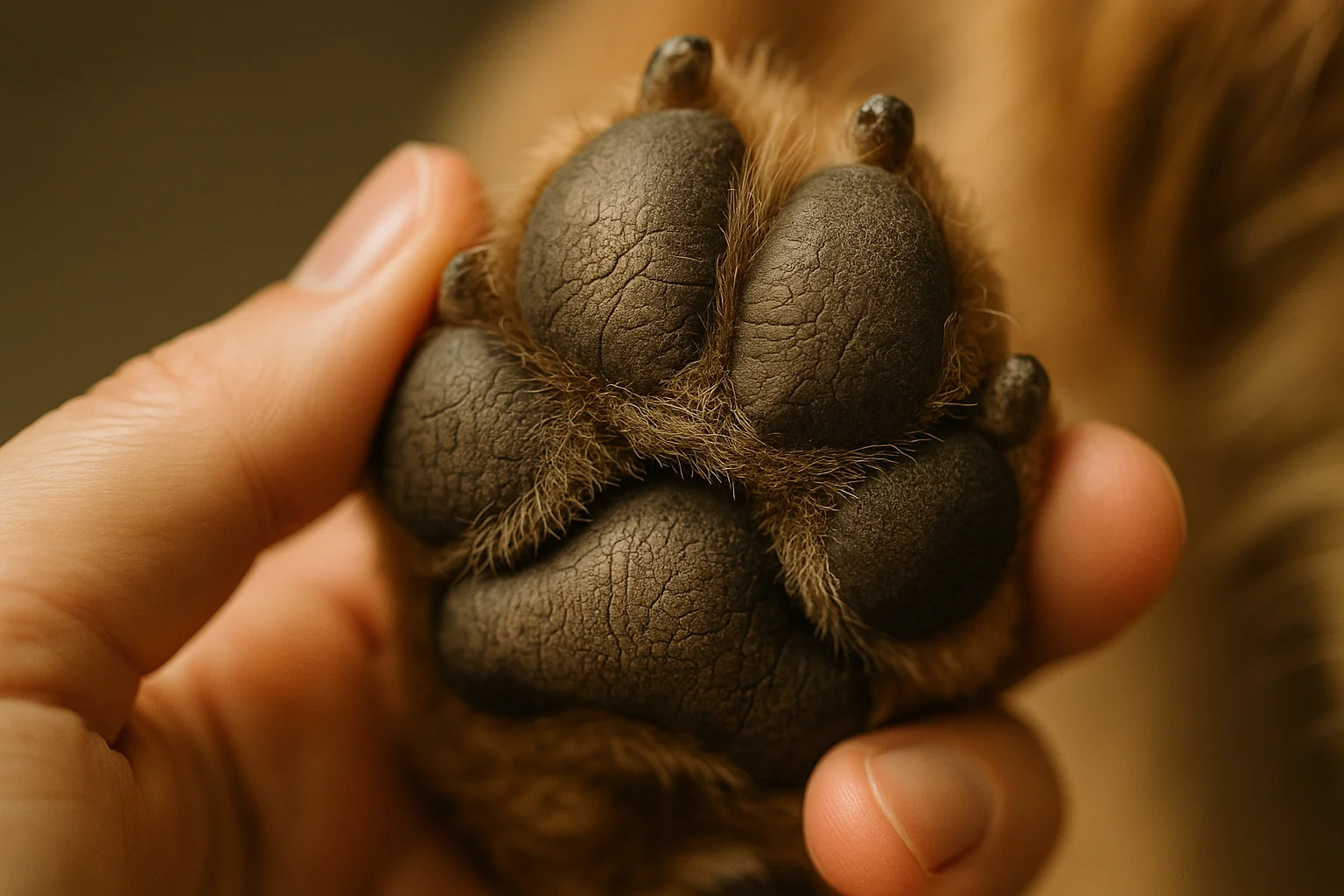
Healthy pads have a slightly rough, leathery texture that varies naturally by breed and how much time a dog spends on hard ground. A crack is different: a visible split or fissure, often along the edge of the pad, sometimes with a raised or peeling edge. Deeper cracks may show a hint of pink tissue underneath or bleed slightly when the paw flexes.
If your dog is favoring the paw or lifting it repeatedly, it's worth ruling out other causes first. Our guide on what makes a dog start limping after a walk covers the wider list of reasons beyond a cracked pad, since the two can look similar from a distance.
First Aid for a Freshly Cracked Pad
Rinse off any visible dirt or debris with cool water, then dry the paw fully, working between the toes as well as over the pad itself. If the crack is bleeding, apply gentle pressure with a clean cloth for a minute or two before treating it further.
Once it's clean and dry, apply a wax-based paw balm over the crack and the surrounding pad. This does two things at once: it seals in moisture the cracked tissue badly needs, and it creates a thin protective layer against dirt getting into the split while it heals.
What Actually Helps a Cracked Pad Heal
Consistency matters more than any single product here. Applying balm once and forgetting about it does very little; twice-daily application for the first several days, paired with genuinely reduced activity, is what actually closes a crack. The same clean-dry-protect approach used for general paw irritation applies here too, just with more attention paid to keeping the crack itself covered and moisturized between applications.
Rest is the part most owners underestimate. A pad that keeps flexing and re-splitting on every walk simply can't close, no matter how good the balm is. Shorter walks on soft, forgiving ground, grass rather than gravel or pavement, give the crack a real chance to knit back together.
Please read first
This article shares general information and lived experience, not individual veterinary or behavioural advice. If you’re concerned about your pet’s health or behaviour, please consult a vet or a qualified professional.
Protecting the Paw While It Heals
A dog boot, or a breathable protective sock for shorter outings, keeps grit and moisture out of a healing crack and cuts down on the flexing that reopens it. This matters even more if the crack was caused by hot pavement damaging the pad in the first place, since the same surface will keep aggravating it until conditions change or the paw is covered.
Our roundup of boots and other gear built to protect a dog's paws covers what actually holds up on daily walks versus what looks good but slips off within a block.
Mistakes That Delay Healing
Continuing normal walking distances on rough ground is the single biggest reason a cracked pad drags on for weeks instead of days. Skipping balm because the crack "looks fine" after a day or two is another common one, since the surface can appear closed while the deeper tissue is still healing.
Tight, long-term bandaging without checking underneath daily can trap moisture and actually slow things down. If a wrap is used, it should come off, get checked, and go back on clean at least once a day.
Realistic Healing Timeline and When to Get It Checked
A shallow, surface-level crack typically closes within 1 to 2 weeks of consistent care and reduced activity. Deeper cracks, or ones that keep reopening because a dog won't slow down, more often take 3 to 4 weeks, and sometimes longer if the paw keeps getting exposed to the surface that caused it. A crack that shows no improvement after a week, bleeds repeatedly, or comes with visible limping is a reason to have it looked at rather than continuing to wait. For the everyday habits that help prevent this from happening again, our Dogs section covers paw inspection and hot-weather protection routines worth building into daily walks.
Key takeaways
Clean, dry, then balm, applied twice daily for real results. Reduced activity on soft ground matters as much as the product used. Boots or wax protect a healing crack from reopening on hard or hot surfaces. Shallow cracks heal in 1 to 2 weeks; deeper ones take 3 to 4. Bleeding, repeated reopening, or ongoing limping means it's time for a vet, not more waiting.
Frequently asked questions
What should I do for a dog's cracked paw pad?
Clean the pad gently, avoid activities that flex or rub the crack further, and apply a wax-based paw balm to keep the tissue from drying out more. Deep or bleeding cracks need a light bandage and, in most cases, a vet check before your dog goes back to normal walks.
How long does a cracked paw pad take to heal?
A shallow crack usually closes within 1 to 2 weeks with regular balm and reduced activity. Deeper cracks, especially ones that reopen with every walk, commonly take 3 to 4 weeks and heal faster once the paw is protected outdoors.
Can a dog still walk on a cracked paw pad?
Short, gentle walks on soft ground are usually fine, but avoid rough terrain, hot pavement, or long distances until the crack has visibly closed. A boot or protective wax reduces the flexing that reopens a healing crack.
What causes a dog's paw pads to crack in the first place?
Hot or rough surfaces, dry winter air, repeated exposure to salt or de-icing chemicals, and simple dehydration of the pad tissue are the most common causes. Dogs that spend most of their time on soft ground are more prone to cracking once terrain changes suddenly.
Should I bandage a cracked paw pad?
Only if it's actively bleeding or at real risk of picking up dirt and debris, and even then keep it loose and change it daily. A pad that's simply dry and cracked, without an open wound, generally heals faster left unbandaged and treated with balm.
Want more practical, no-nonsense paw care guidance like this? Join the Paw Province Letter