How to Inspect Your Dog’s Paws Every Day
By Paw Province Editorial · Published September 22, 2026
TL;DR
A 30-second check per paw catches thorns, cracks, and early infections long before they become painful or expensive. Look at the pad, between every toe, and the nails, and compare each paw to the other three. Pair the check with an existing habit, like post-walk cleaning, so it actually happens daily. Warmth, swelling, or a smell that wasn’t there yesterday are the signals worth acting on fastest. Most paw problems are far easier to treat when caught in the first day or two.
Most paw problems don’t appear overnight. A thorn works its way in slowly, a small crack widens over a week of walks, and an early infection often starts as a barely noticeable patch of redness before it turns into a limp. The dogs that dodge painful, expensive paw problems usually belong to owners who glance at their paws daily, not owners with better luck. The habit itself is almost embarrassingly simple once it’s built in.
Why a Daily Check Catches What a Weekly One Misses
Paw problems tend to escalate fast once they start. A cracked pad that’s caught on day one is a minor annoyance; left unnoticed for a week of walks on the same surface, it can turn into a genuinely painful split. The same is true for the early stages of an interdigital infection, which is often manageable at home if spotted early but can require a vet visit once it’s established. Our guide to recognizing an interdigital infection in dogs covers exactly what those early signs look like.
A daily glance costs almost nothing in time and catches problems while they’re still small. A weekly check means anything that started on day two has had five extra days to get worse before anyone notices.
The 30-Second Check, Paw by Paw
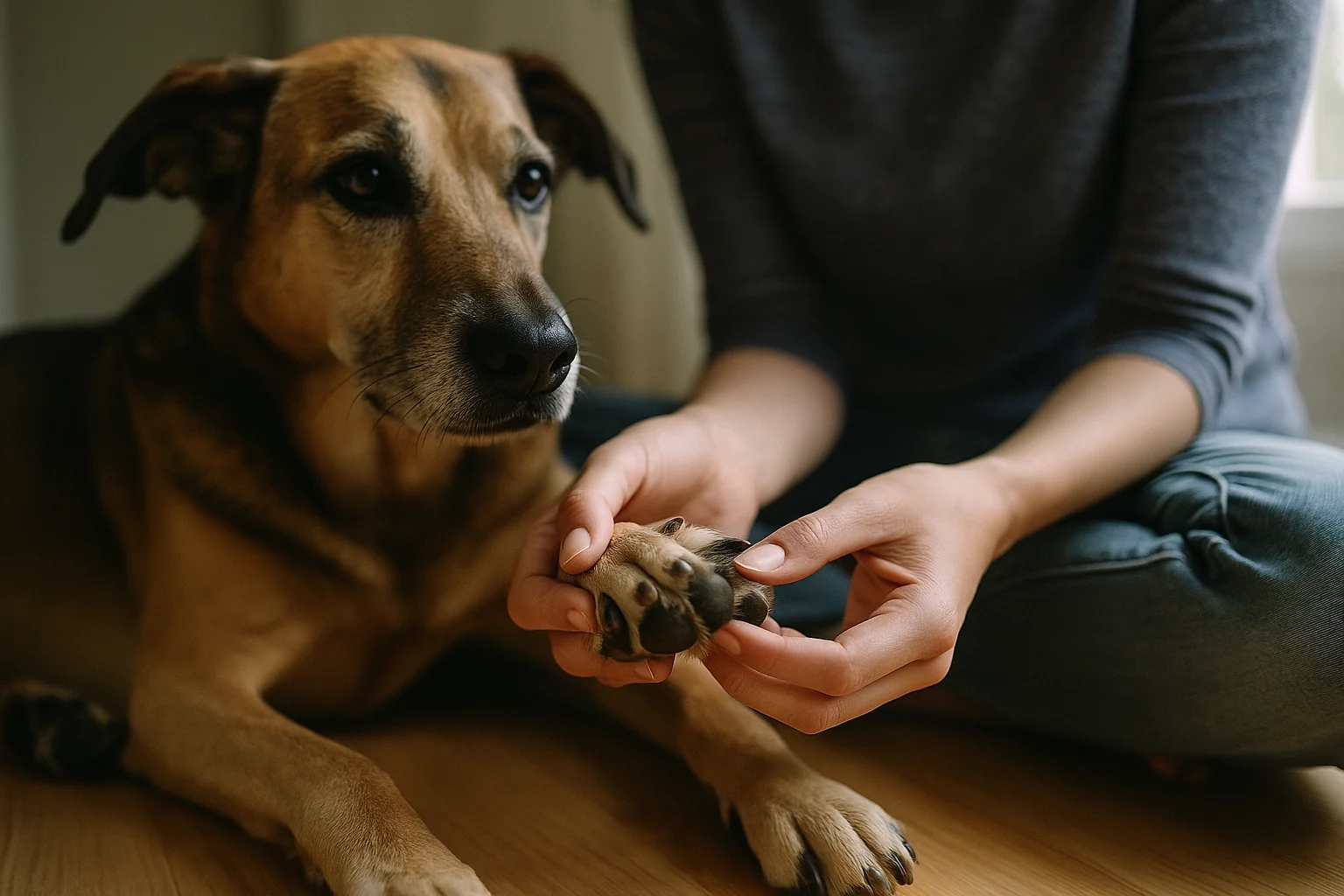
This doesn’t need to be a formal sit-down session. It fits easily into a moment you’re already handling the paw, like drying it after a walk:
- Look at the pad surface. Check for cuts, cracks, blisters, or anything embedded, thorns and small stones are the most common culprits.
- Spread the toes. Redness, swelling, or a foul smell between the toes is often the first visible sign of infection, well before a dog starts limping.
- Feel for heat and tenderness. A paw that’s noticeably warmer than the others, or one your dog pulls away from when touched, deserves closer attention.
- Check the nails. Overgrown nails change how weight distributes across the paw and can eventually affect gait, not just comfort.
- Compare to the other three paws. A difference between paws, one warmer, one swollen, one avoided, is often more informative than any single paw looked at alone.
Thirty seconds per paw adds up to about two minutes total, which fits naturally into the routine covered in our guide to cleaning a dog’s paws after a walk, since you’re already holding each foot.
What Counts as Normal vs. Worth Watching
Slightly rough or dry pads, especially on active dogs, are normal and rarely a concern on their own. A little dirt between the toes right after a walk is expected too. What’s worth noting: any crack deep enough to see into, swelling that wasn’t there yesterday, a smell that’s new or stronger than usual, or a nail that’s visibly curling toward the pad.
Our guide on recognizing the signs of paw pain in dogs is a useful companion here, since pain isn’t always obvious from limping alone; a dog may simply lick one paw more, shift weight subtly, or hesitate before a jump they’d normally take without thinking.
Building the Habit So It Actually Happens Daily
A check that lives as a separate, deliberate task tends to get skipped on busy days. Attaching it to something that already happens daily, drying paws after a walk, an evening cuddle on the sofa, brushing, works far better than relying on memory alone.
Keep the tone relaxed rather than clinical; a calm voice and a treat afterward teach a dog that paw handling is routine, not something to brace for. That matters later too, since a dog comfortable with paw handling is considerably easier to treat if something ever does need attention.
When to Stop Watching and Call a Vet
Most minor findings, a small cut, a bit of dryness, mild dirt buildup, resolve on their own with basic home care. Book a vet visit if a wound isn’t visibly improving within a couple of days, if swelling or heat is spreading rather than settling, if your dog starts limping, or if something embedded won’t come out with gentle effort. Our guide on when a paw issue needs a vet covers the decision in more detail. Catching these situations early, while they’re still small, is the entire point of checking daily in the first place.
Key takeaways
A daily 30-second check per paw catches problems while they’re still minor and easy to treat. Look at the pad, between every toe, the nails, and feel for heat or tenderness. Comparing all four paws to each other often reveals more than checking one paw alone. Attach the habit to something you already do daily so it doesn’t get skipped. Escalating swelling, spreading heat, or persistent limping are the clearest signals to book a vet visit.
Frequently asked questions
How do you inspect a dog’s paws for problems?
Hold the paw gently and look at the pad surface, the skin between each toe, and the nails, feeling for anything warm, swollen, or unusually tender. Spread the toes to check for redness, debris, or matted fur trapping something underneath.
How often should you check your dog’s paws?
Once a day is enough for most dogs, ideally paired with an existing habit like a post-walk cleaning or evening cuddle so it doesn’t become one more task to remember separately.
What should you look for during a paw check?
Cuts, cracks, swelling, redness, heat, embedded thorns or debris, unusual odor, overgrown nails, and any limping or paw-favoring behavior. Compare each paw to the other three, since a difference between paws is often more telling than either paw alone.
How long should a daily paw inspection take?
About 30 seconds per paw, roughly two minutes total for all four, once the routine is familiar to both you and your dog.
When should a paw issue be checked by a vet rather than watched at home?
See a vet if a wound doesn’t start improving within a couple of days, if swelling or heat spreads, if your dog is limping, or if you find something embedded that won’t come out easily. Catching these early is exactly what a daily check is for.
Want more practical, no-fluff paw care guidance as it’s published? Join the Paw Province Letter