
Why a Dog Limps After a Walk
By Paw Province Editorial · Published September 4, 2026
TL;DR
Most post-walk limping comes from fatigue, a sore pad, or something small caught between the toes. Rest the leg for the rest of the day rather than walking it off. A limp that clears within a few hours is usually minor; one that lingers past 24 hours, or gets worse, needs a proper look. Check between the toes and along the leg first, since that alone often reveals the cause.
Your dog trots off happily on a walk, then comes home holding a paw up, or hopping every few steps. It is one of the most common reasons owners suddenly worry mid-evening, torn between "it's probably nothing" and "should I call the vet". The honest answer depends on what actually caused the limp, and most causes are minor. This guide walks through the real reasons dogs limp after a walk, and how to tell a passing niggle apart from something that needs attention.
Muscle Fatigue Is the Most Common Cause
A longer walk than usual, a first hike of the season, or an extra burst of running after a squirrel can leave muscles simply overworked. This kind of limp tends to appear gradually, toward the end of the walk or shortly after getting home, rather than suddenly mid-stride.
Fatigue-related limping usually improves with rest alone. A dog that is limping slightly but still eager to move, still eating normally, and not flinching when the leg is touched is very likely dealing with tired muscles rather than an injury.
Something Caught in the Paw
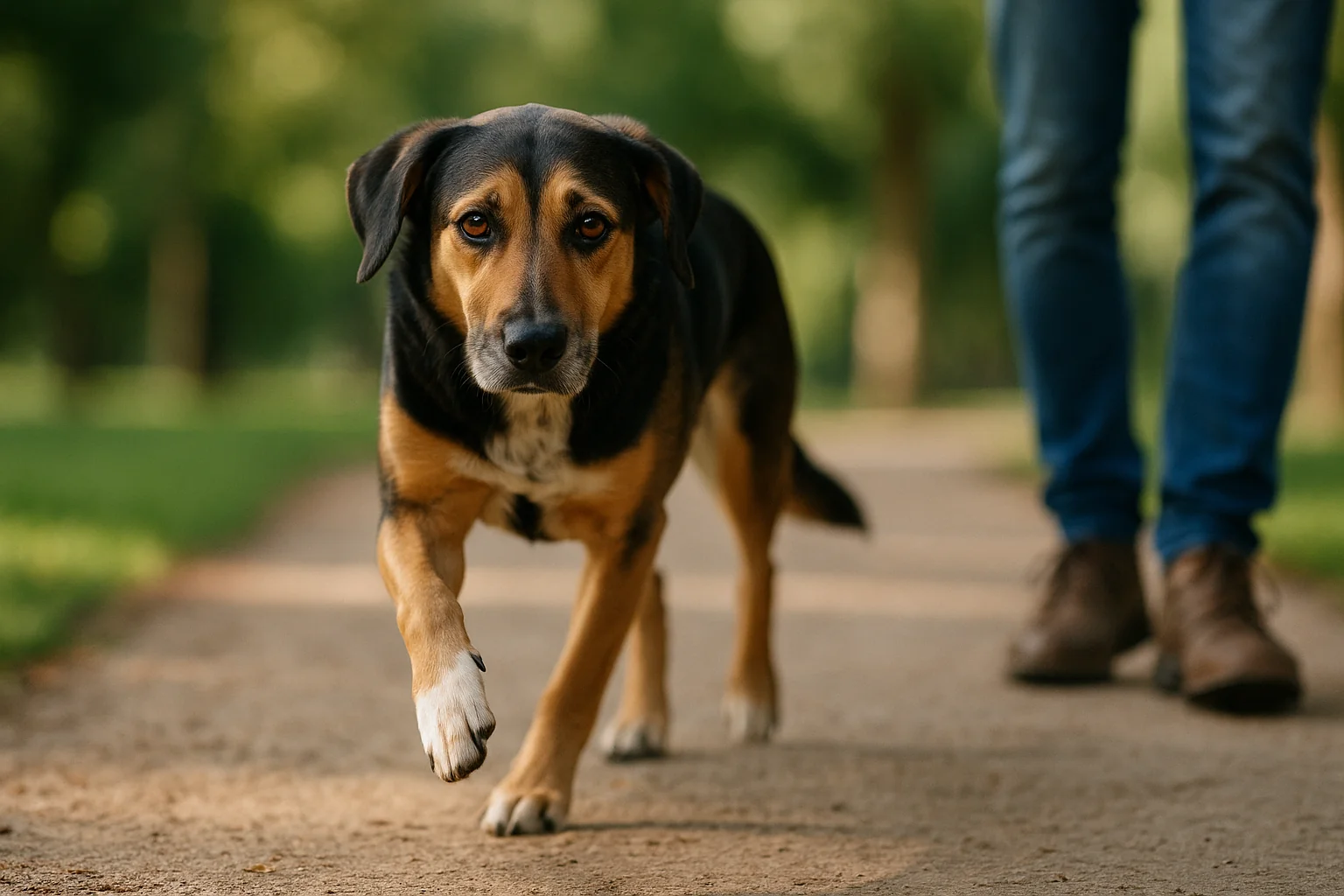
A thorn, a piece of grit, or a grass seed lodged between the toes is one of the most common causes of a sudden limp that starts right after the walk, not gradually during it. The dog will often stop abruptly, lift the paw, and lick or chew at one specific spot.
Checking between the toes and across the pads takes less than a minute and often solves the mystery immediately. Our guide on removing a foreign object from a dog's paw covers the safe way to get something out without pushing it deeper.
A Sore or Cracked Pad
Rough terrain, hot pavement, or a long walk on unfamiliar ground can leave a pad sore, cracked, or mildly burned. This kind of limp tends to be most obvious on hard or textured surfaces and eases up noticeably once the dog is walking on grass or carpet instead.
Check each pad for cracks, unusual redness, or a texture that feels rougher or softer than the others. Dogs that regularly walk on hot ground in summer are especially prone to this; our overview of when ground temperature becomes dangerous for dog paws explains the thresholds worth knowing.
Please read first
This article shares general information and lived experience, not individual veterinary or behavioural advice. If you’re concerned about your pet’s health or behaviour, please consult a vet or a qualified professional.
A Sprain, Strain, or Deeper Injury
A sudden twist, an awkward landing after a jump, or a hard stop while running can strain a muscle or sprain a joint. This type of limp tends to appear instantly, mid-walk, rather than building up gradually, and it is often more pronounced than simple fatigue.
Watch for swelling, obvious pain when the leg is touched, or a complete refusal to bear weight, all signs that point beyond a minor issue. Our guide on the signs that show a dog is in paw pain covers how to read these cues more precisely, and our companion piece on when to see a vet about your dog's paw lays out the exact point where rest at home is no longer enough.
What to Do Once the Limp Starts
Stop the walk and check the paw and leg on the spot if it is safe to do so. Once home, keep activity to short leashed toilet trips only, skipping play and off-leash time until the limp has clearly resolved. Resist the temptation to "walk it off"; that outdated advice can turn a mild strain into a longer-term problem or drive a lodged object deeper into the skin.
If you find a visible wound rather than just a limp, our guide on what to do if your dog has a paw wound covers cleaning and monitoring it properly. For everyday prevention, our Dogs section covers routine paw care that catches small problems before they turn into a limp in the first place.
Key takeaways
Gradual limping late in a walk usually points to muscle fatigue, while a sudden limp mid-walk suggests something caught in the paw or a strain. Checking between the toes and along the leg takes under a minute and often reveals the cause immediately. Rest the leg rather than walking it off. A limp lasting more than 24 hours, or worsening, needs closer attention rather than more time.
Frequently asked questions
Why does my dog limp after a walk?
Most limping after a walk comes from muscle fatigue, a sore pad, or a small object like a thorn or grit lodged between the toes. Less commonly, it signals a sprain or strain from an awkward step, twist, or hard landing during the walk.
Should I let my dog walk on a limping leg?
No. Keep them off the leg as much as possible for the rest of the day, with short leashed toilet trips only. Walking it off, despite the old advice, can worsen a strain or push a lodged object deeper into the paw.
How long does a normal post-walk limp usually last?
A limp from simple fatigue or a minor knock typically fades within a few hours to a day of rest. If it has not improved noticeably after 24 hours, or it is getting worse, treat it as something that needs a closer look.
Can hot pavement cause a dog to limp?
Yes. Hot asphalt or sand can burn paw pads enough to cause visible discomfort and limping, sometimes with pads that look red, blistered, or unusually soft to the touch, especially in warmer months.
What should I check first when my dog starts limping?
Check between the toes and across each pad for anything stuck in the skin, then gently feel the leg from paw to shoulder for swelling, heat, or a flinch. That quick check usually tells you whether it is a paw issue or something higher up the leg.
Want more practical, realistic guidance like this for everyday walks with your dog? Join the Paw Province Letter