
Why Your Dog Has Stains Between Its Toes
By Paw Province Editorial · Published September 14, 2026
TL;DR
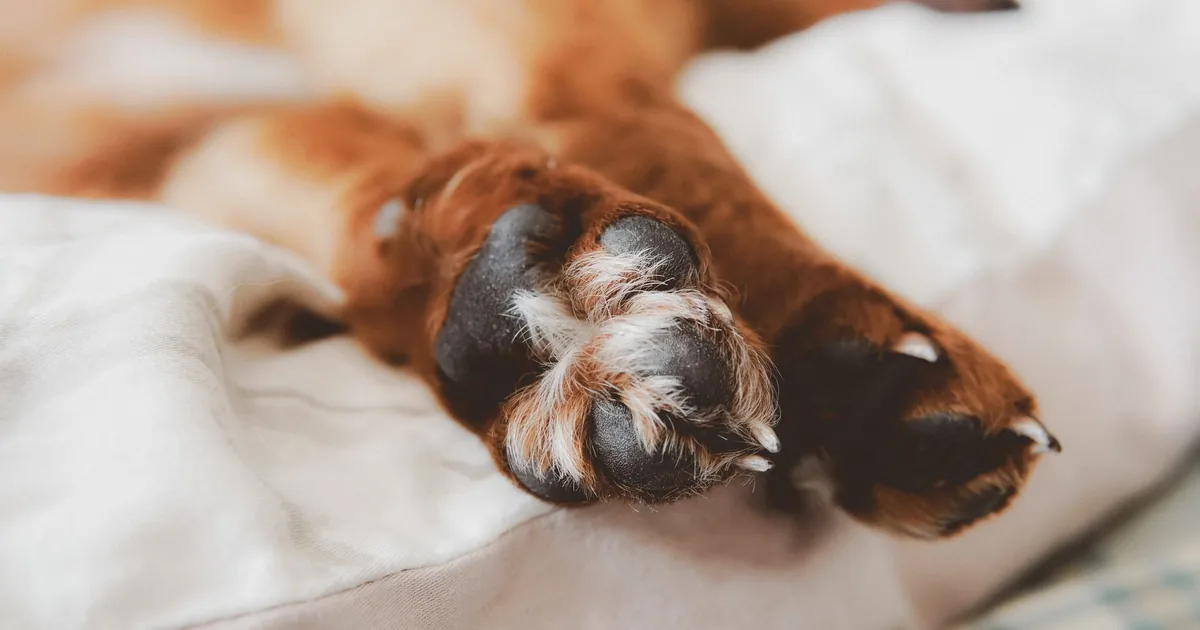
Those reddish-brown stains between a dog's toes come from saliva, not dye or dirt, thanks to a pigment called porphyrin that oxidises on light fur. The staining itself is harmless, but it is a visible record of how much a paw has been licked, which makes it a useful early clue. It shows up only on pale fur, so darker dogs lick just as much without any visible sign. Staining paired with a strong smell, swelling, or one paw licked far more than the others points toward a cause worth investigating. Regular drying, trimming, and gentle cleansing reduce new staining over time.
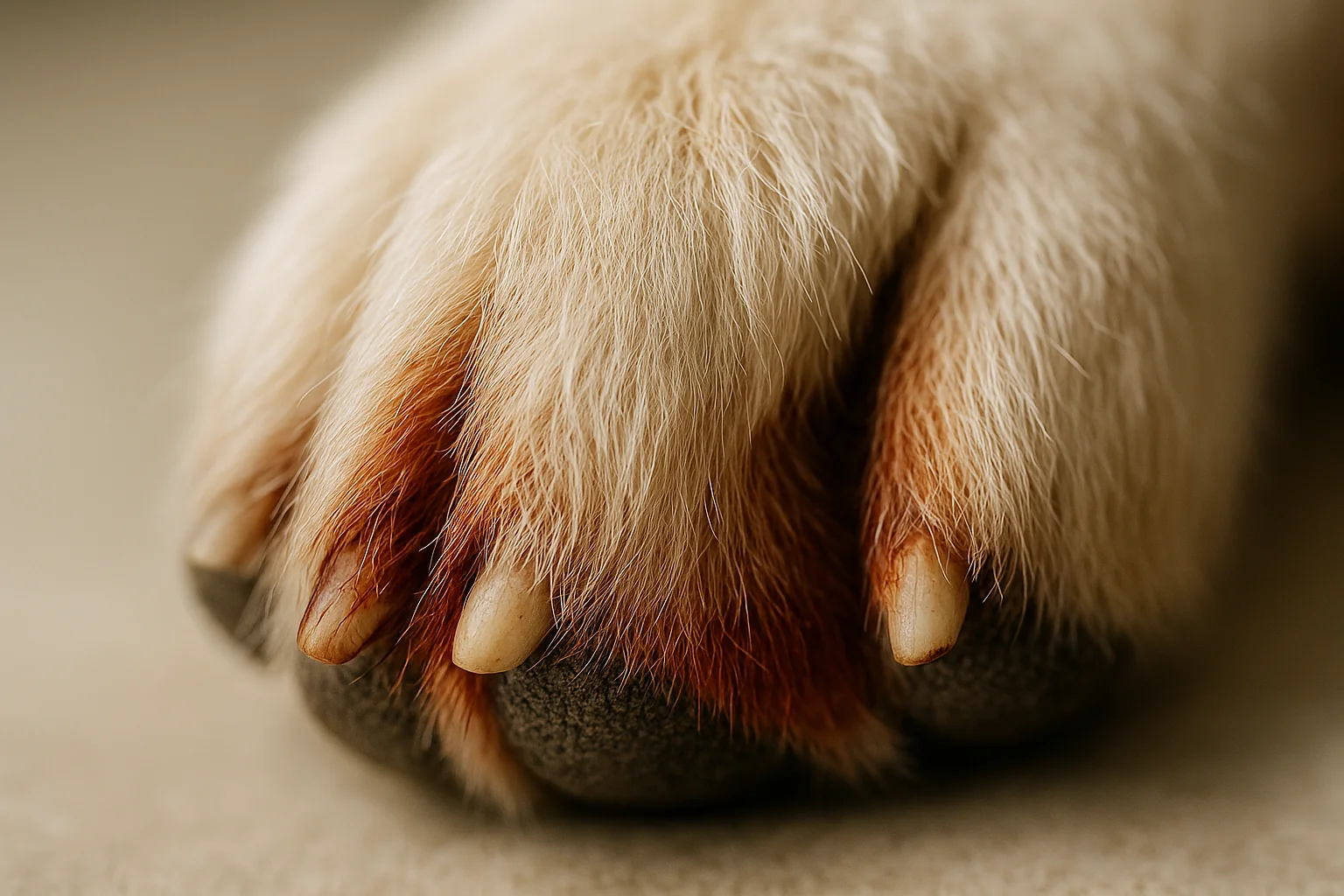
You catch sight of it while trimming nails: a patch of rust-brown fur between the toes on an otherwise white or cream-coloured paw. It looks like a stain from mud or dye, but it usually isn't either. This kind of staining has a specific, well-understood cause, and once you know what it means, it becomes a genuinely useful signal rather than just a cosmetic annoyance. This guide covers where the stain comes from, what it tells you, and how to manage it.
What's Actually Causing the Discolouration
The stain comes from porphyrin, a pigment naturally present in saliva, tears, and other bodily fluids. When saliva sits on light-coloured fur and is exposed to air, the porphyrin oxidises and turns a reddish-brown or rust colour, similar to how tear staining develops under the eyes of pale-coated breeds.
In other words, the stain is essentially a visible record of saliva contact over time. A paw with noticeable staining between the toes has been licked more, and more consistently, than a paw without it, which is exactly why the colour change is worth paying attention to rather than dismissing as a grooming quirk.
Why It Only Shows Up on Light-Coloured Dogs
Porphyrin staining happens at the same rate in every dog that licks its paws, dark-coated and light-coated alike. The difference is entirely visibility: the same rust tint that stands out clearly against white or cream fur is completely invisible against black, brown, or heavily brindled coats.
This matters because owners of darker dogs shouldn't assume their dog licks its paws less just because they don't see staining. If you're unsure how much licking is actually happening, our guide on why dogs lick their paws covers how to judge frequency and duration directly, rather than relying on visual staining as the only clue.
When Staining Points to Something More
Staining by itself is not a diagnosis, just a marker of licking. What turns it into a stronger signal is what shows up alongside it. A stained paw that also smells noticeably stronger than the others, feels warm, looks swollen, or gets targeted by more licking than the rest of the paws suggests something is actively bothering your dog, not just an old habit leaving a faded mark.
Interdigital yeast infections are a particularly common companion to fresh, ongoing staining, since the same moisture and licking that cause the stain also create ideal conditions for yeast overgrowth between the toes. Our guide on recognizing an interdigital infection walks through the additional signs to check for.
Please read first
This article shares general information and lived experience, not individual veterinary or behavioural advice. If you’re concerned about your pet’s health or behaviour, please consult a vet or a qualified professional.
How to Reduce New Staining
Since the stain forms from saliva exposure, cutting down on unnecessary licking is the most direct way to slow new staining. If the licking itself has an identifiable cause, allergy, irritation, or a habit, addressing that cause matters more than treating the stain directly.
For the cosmetic side, mild cleansers formulated for porphyrin staining, used a few times a week, gradually lighten the tint on new fur growth. Regular trimming removes already-stained fur faster than waiting for it to grow out naturally, and keeping the paw thoroughly dry after walks, as covered in our guide on drying a dog's paws properly, reduces the damp conditions that make licking (and staining) more likely in the first place.
It's worth noting that existing stained fur won't lighten overnight. Porphyrin binds into the hair shaft itself, so the colour fades gradually with grooming and new growth rather than washing out in a single bath.
Building Staining Into Your Regular Paw Checks
Because staining develops gradually, it works well as an early-warning marker if you check paws on a regular basis rather than only when something seems obviously wrong. A quick look during a daily paw inspection lets you catch a new patch of staining early, while it's still faint, which makes it much easier to trace back to a recent change in licking behaviour or environment.
If staining appears suddenly on a paw that has always looked clean, treat that as a more urgent signal than staining that has been mild and stable for months, since a sudden change usually means something new is prompting the extra licking.
Key takeaways
Reddish-brown staining between the toes comes from porphyrin in saliva, not dirt or dye. It only shows up on light fur, so darker dogs lick just as much without a visible mark. Staining alone is harmless; it becomes a stronger signal alongside smell, swelling, or extra licking on one paw. Regular drying and gentle porphyrin-specific cleansing slow new staining over time. A sudden new patch of staining is worth checking sooner than staining that has stayed stable for months.
Frequently asked questions
Why does my dog have reddish-brown stains between its toes?
Those stains almost always come from saliva, not dirt or dye. Saliva contains a pigment called porphyrin that oxidises to a rust-brown colour on light-coloured fur, so the stain is a sign of a paw that has been licked more than usual.
Are porphyrin stains dangerous for my dog?
The staining itself is not dangerous or painful. It matters as a signal: it tells you the paw has been licked enough, over enough time, to leave a visible mark, so it is worth checking why that licking is happening in the first place.
Can I remove porphyrin stains from my dog's paws?
Yes, mild cleansers made for porphyrin staining, along with regular drying and trimming, gradually lighten new fur growth. Existing stained fur fades slowly with grooming rather than disappearing instantly, since the pigment is bound into the hair shaft.
Do stains between the toes always mean an infection?
No, staining alone doesn't confirm infection. It becomes a stronger signal when paired with a strong smell, swelling, redness, or your dog licking that specific paw more than the others; those combined signs point toward infection rather than staining alone.
Why do only light-coloured dogs seem to get these stains?
Porphyrin staining happens in every dog that licks its paws, but it only shows up visibly on white or light-coloured fur. Darker fur hides the same staining completely, which is why owners of pale-coated breeds notice it far more often.
Want more practical, no-nonsense paw care guidance in your inbox? Join the Paw Province Letter