Why Dogs Lick Their Paws
By Paw Province Editorial · Published September 11, 2026
TL;DR
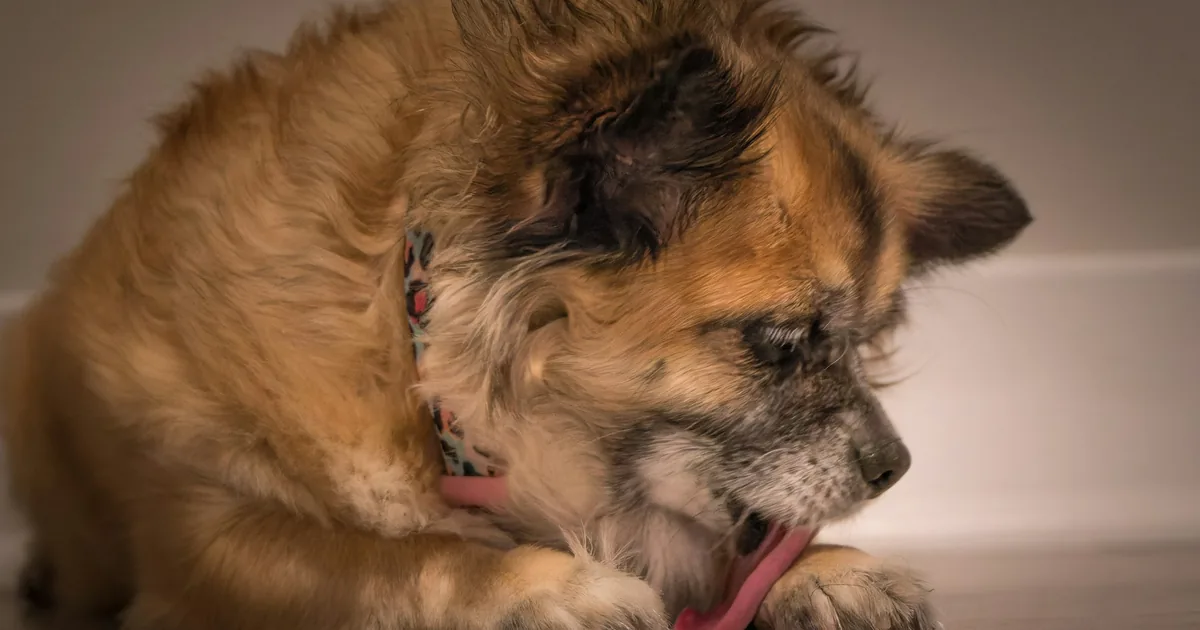
A little paw licking after a walk or a nap is normal grooming and nothing to worry about. Watch for sessions that run several minutes, target one paw, or leave the fur wet or pink-stained, since that pattern points to allergy, irritation, or a habit rather than ordinary hygiene. Allergic licking tends to hit multiple paws and often follows a season. Behavioural licking from boredom or stress usually shows up alongside other signs, like pacing or attention-seeking. Licking that will not ease up after a week of closer attention is worth a vet visit.
You notice it during a quiet evening on the sofa: your dog is working on one paw again, steady and focused, longer than feels ordinary. Is this just a dog being a dog, or the start of something that needs attention? The honest answer is that both are common, and the difference usually comes down to duration, focus, and what else is going on. This guide breaks down what counts as normal grooming, what points to a medical cause, and what to actually do once you have spotted a pattern.
What Counts as Normal Paw Licking
Dogs groom their paws the way cats groom their coats: a quick pass after a walk, after waking from a nap, or before settling in for the evening. A normal session lasts well under a minute per paw, happens once or twice a day, and does not leave any visible mark behind.
This kind of licking removes dirt, dries damp fur, and sometimes addresses a small itch from a blade of grass or a bit of pollen caught between the toes. It is not something to interrupt or worry about, and trying to stop it entirely usually is not necessary.
The shift worth noticing is when licking stops being a quick pass and becomes a session, several minutes at a stretch, aimed at the same paw each time, sometimes even waking the dog from sleep to resume.
The Medical Causes Behind Persistent Licking
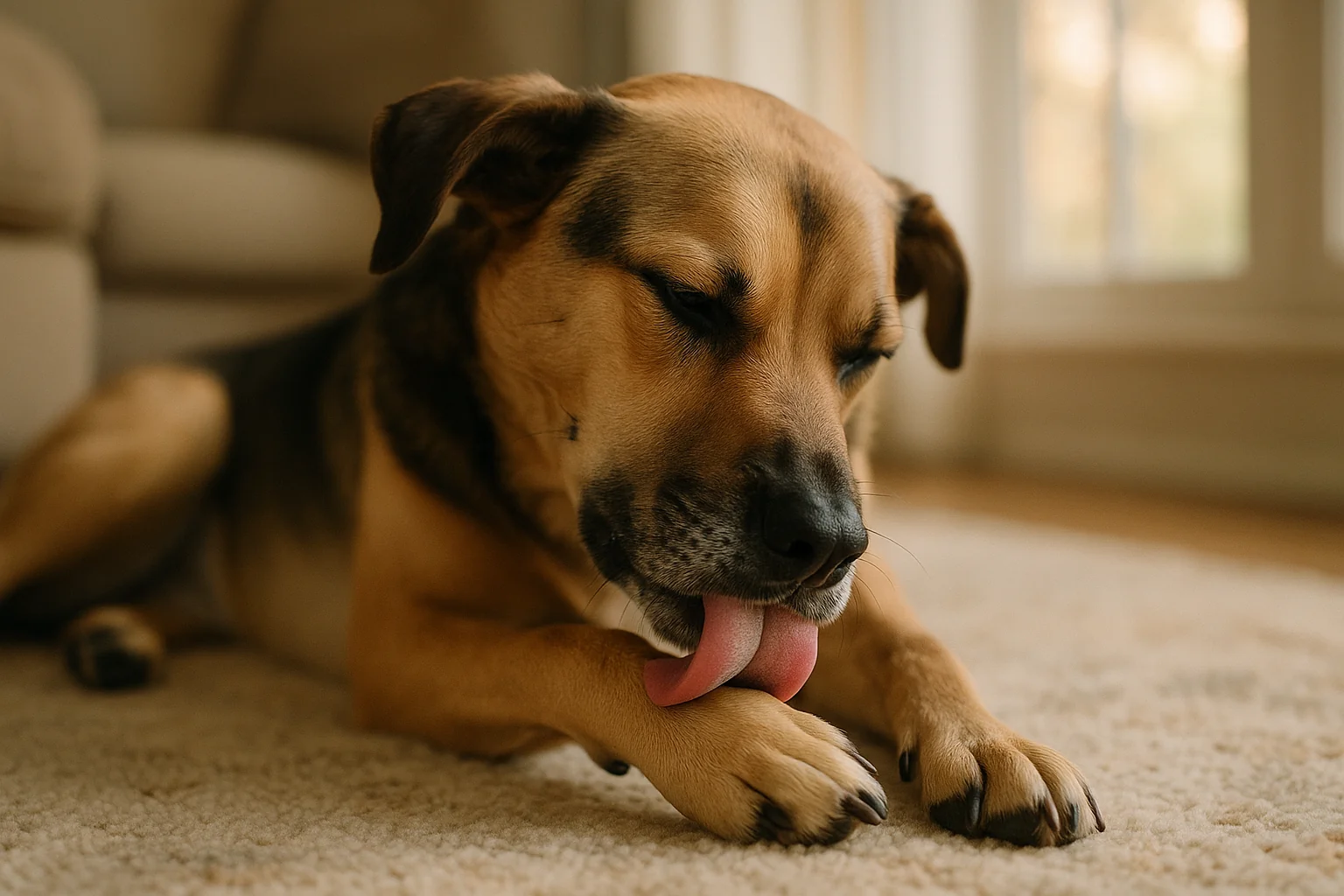
Persistent, focused licking is frequently the dog's own way of dealing with an itch or discomfort it cannot otherwise reach. Environmental allergies (pollen, dust mites, mould) and food sensitivities both commonly show up as paw irritation, since paws pick up allergens directly from the ground and carry a high concentration of sweat glands between the pads.
Interdigital yeast or bacterial infections are another frequent cause, especially in dogs with skin folds between the toes or a history of getting their paws wet often. You can learn to recognize the early signs of an interdigital infection before it turns into a bigger problem, since the pattern often starts as exactly this kind of extra licking.
A splinter, grass awn, or small cut can also trigger targeted licking at one specific paw. If the licking is new, sudden, and confined to a single foot, checking for something physically lodged in the pad or between the toes is worth doing before assuming it is behavioural.
Please read first
This article shares general information and lived experience, not individual veterinary or behavioural advice. If you’re concerned about your pet’s health or behaviour, please consult a vet or a qualified professional.
Behavioural Licking: Boredom, Stress, and Habit
Not every case has a physical trigger. Dogs left alone for long stretches, under-exercised, or going through a stressful change at home sometimes turn to paw licking as a self-soothing habit, similar to nail-biting in people. This kind of licking tends to appear during downtime, often the same time each day, and can continue even once any original itch has cleared up.
Once a licking habit is established, it can persist purely as a learned behaviour, which is part of why catching the pattern early matters more than treating a single instance.
How to Tell the Difference in Your Own Dog
A few concrete signals separate ordinary grooming from something that needs more attention. Session length is the clearest one: under a minute suggests grooming, five minutes or more suggests a pattern. Focus matters too, since allergic and behavioural licking often move between paws while a localised infection or injury tends to stay fixed on one.
Visible change is the other marker. Saliva contains a pigment called porphyrin that stains light-coloured fur a rust or pink shade over time, so a paw that looks noticeably darker than the others is a sign the licking has been going on longer than you may have realised. Thinning fur, a moist or reddened patch of skin, or a paw that smells different from the others all point toward a case worth watching more closely, not just habit.
If you are also noticing your dog favouring a leg or slowing down on walks, it is worth reading through the broader signs of paw pain in dogs to see whether licking is one symptom among several rather than an isolated habit.
What to Do Once You've Spotted a Pattern
Start by actually looking at the paw: spread the toes, check the pads, and feel for heat, swelling, or anything lodged between them. A short daily check like this catches most physical causes early, and building it into a daily paw inspection routine makes the next incident much faster to spot.
If nothing is visibly wrong and the licking still continues, try ruling out boredom first: more exercise, a food puzzle, or a change in the daily routine sometimes resolves habitual licking within a week or two. If the licking is intense enough that your dog is close to breaking the skin, gently distracting and redirecting is safer than letting it continue unchecked, since licking can escalate into biting and chewing if the underlying cause is not addressed.
Keep a rough note of when the licking happens, how long it lasts, and whether it is always the same paw. That pattern, more than any single session, is what actually helps sort out whether you are dealing with grooming, allergy, infection, or habit.
Key takeaways
A quick lick after a walk is normal; a multi-minute session on one paw is not. Allergies and interdigital infections are the most common medical causes of persistent licking. Boredom and stress can create a habit that outlasts the original trigger. Fur staining, thinning, or a smell change signal it has gone on for a while. A short daily paw check is the fastest way to catch problems early.
Frequently asked questions
Why does my dog lick its paws so much?
Most paw licking is normal grooming, usually under a minute per paw once or twice a day. Frequent, focused licking on one paw for several minutes at a time is more often a sign of allergy, irritation, or a habit that has taken hold.
Is it normal for a dog to lick its paws every day?
Yes, brief daily licking after walks or naps is completely normal self-grooming. It becomes worth watching when the sessions get longer, target the same paw, or leave the fur wet, pink-stained, or thinning.
What does compulsive paw licking look like?
Compulsive licking is repetitive, hard to interrupt, and often continues even when the dog is otherwise distracted. It tends to focus on one spot, leaves visible staining or hair loss, and can escalate into a raw patch called a hot spot.
Can allergies cause a dog to lick its paws?
Yes, paws are one of the most common places allergy symptoms show up in dogs, whether the trigger is environmental, food-based, or a flea reaction. Allergic licking is usually on multiple paws and often seasonal.
When should I worry about paw licking?
Worry when licking is constant rather than occasional, focused on one paw, paired with limping, swelling, or a smell, or when it does not ease up after a week of watching closely. That combination is worth a vet visit.
Want more practical, no-nonsense paw care guidance in your inbox? Join the Paw Province Letter