How to Properly Dry Your Dog’s Paws
By Paw Province Editorial · Published September 21, 2026
TL;DR
Towel-dry every paw right after rinsing, focusing on the gaps between the toes where moisture lingers longest. A cool, low hairdryer speeds things up for thick-coated paws, but constant motion and distance matter. Skipping drying is one of the most common, avoidable causes of yeast-related paw problems. Full air-drying usually finishes in 10 to 20 minutes indoors. Damp paws that stay damp for hours are the real risk, not water itself.
Rinsing a dog’s paws after a walk solves half the problem and quietly creates another one if the drying step gets skipped. Warm, damp fur between the toes is close to ideal conditions for yeast and bacteria, and a paw left to “air dry” under a coat of thick fur can stay damp for hours. The fix takes less than a minute of extra effort per paw, once you know exactly where to focus it.
Why Drying Matters as Much as Cleaning
The skin between a dog’s toes is warm, has poor airflow, and sits close to the ground where it picks up moisture constantly. Once that skin is damp, it becomes exactly the environment yeast and bacteria need to multiply, which is a major reason dogs develop the kind of persistent, musty smell covered in our guide on why dog paws sometimes smell bad.
A rinse without a proper dry can leave a paw wetter for longer than a walk through a puddle would on its own, simply because the water is now trapped in fur rather than sitting briefly on the surface. If you haven’t settled on a cleaning method yet, our guide to cleaning a dog’s paws after a walk covers rinsing versus wiping in more depth before this drying step.
The Right Way to Towel-Dry a Paw
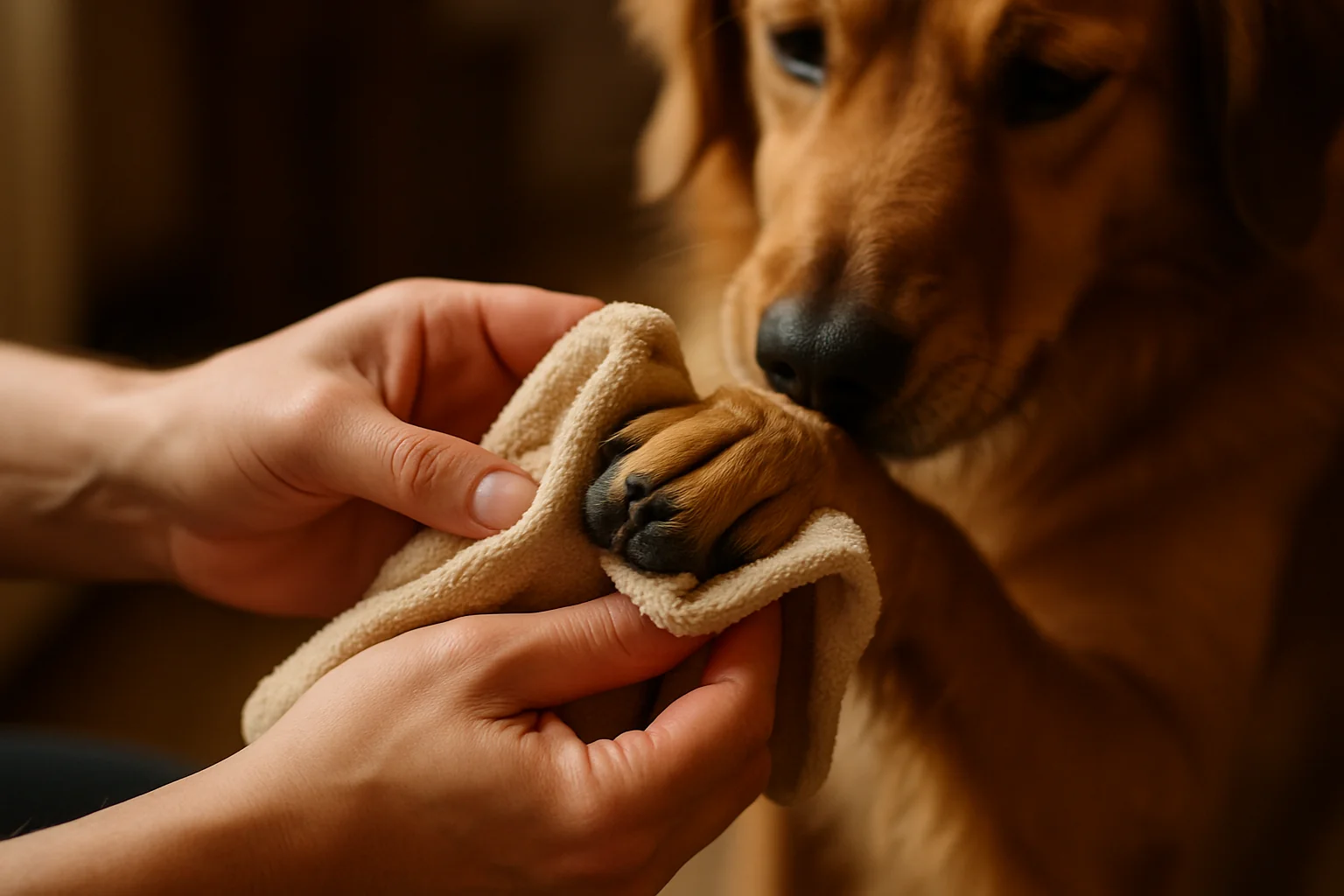
Use an absorbent towel and pat rather than rub; rubbing can irritate skin that’s already slightly softened by water. Press the towel gently into the gaps between each toe for a couple of seconds per gap, since that’s where the towel’s pressure actually reaches skin a quick outer wipe never touches.
Give each paw roughly 20 to 30 seconds of towel contact, longer for dogs with dense or long paw fur. A microfiber towel absorbs noticeably more than a standard cotton one and is worth keeping by the door specifically for this.
When (and How) to Use a Hairdryer
A hairdryer isn’t necessary for most dogs, but it helps for thick-coated breeds or in cold weather when a slow air-dry means a genuinely cold, damp paw for longer. Use the coolest, lowest-speed setting only, held at least 20 to 30 centimetres from the paw, and keep it moving constantly rather than pointed at one spot.
Stop immediately if your dog seems anxious about the noise or airflow; forcing it tends to build a lasting aversion that makes every future paw-care session harder. A cool setting held too close can also be genuinely uncomfortable on sensitive pad skin, so distance and motion matter more than drying speed.
How Long Full Drying Actually Takes
A towel-dried paw typically finishes air-drying within 10 to 20 minutes indoors at room temperature. Thick or long-haired paws, and cold, humid weather, can stretch that further. This is exactly why the towel step isn’t optional: it removes most of the moisture upfront rather than leaving it all to slow evaporation.
If your dog spends the drying window lying on a bed or sofa, a spare towel underneath the paws catches residual dampness and protects the furniture, a small habit that saves a surprising number of damp-fabric smells over a season.
What Happens When Drying Gets Skipped Regularly
Occasional damp paws aren’t a serious problem on their own. The risk builds when drying is skipped after most walks over weeks, which is when yeast has the conditions it needs to take hold between the toes. Our guide on preventing yeast infections on dog paws covers the early signs worth watching for, including the reddish-brown staining that comes from a dog licking damp, irritated toes more than usual.
Drying is also a good moment to fold in a quick visual check, since the toes are already spread and the fur is pushed aside. Our daily paw inspection routine walks through what a 30-second check per paw should actually cover, and doing it right after drying means you’re not adding a separate step to the day.
Key takeaways
Dry paws right after rinsing, not just when convenient. The gaps between the toes need direct towel pressure, not just a surface wipe. A cool, low hairdryer helps thick-coated paws but should never run hot or stay in one spot. Full air-drying takes 10 to 20 minutes indoors once towel-dried. Regularly skipped drying is a leading, avoidable cause of yeast-related paw irritation.
Frequently asked questions
How do you properly dry a dog’s paws after cleaning them?
Pat each paw dry with an absorbent towel, then gently separate the toes and press the towel into the gaps between them, since that’s where moisture lingers longest. Let the fur air-dry the rest of the way rather than rubbing it dry.
Why does drying between the toes matter so much?
The skin between the toes stays warm, dark, and poorly ventilated once damp, which is exactly the environment yeast and bacteria need to multiply. Paws that are rinsed but never properly dried are a common, avoidable cause of recurring irritation.
Can you use a hairdryer on a dog’s paws?
Yes, on the coolest, lowest-speed setting held at least 20 to 30 centimetres away, moved constantly rather than held on one spot. Never use a hot setting, and stop immediately if your dog seems distressed by the noise or airflow.
How long does it take for a dog’s paw to air-dry naturally?
A towel-dried paw usually finishes air-drying within 10 to 20 minutes indoors at room temperature. Thick-coated or long-haired paws can take longer, which is why a towel pass first makes a real difference.
What happens if you don’t dry your dog’s paws properly?
Trapped moisture between the toes softens skin and creates conditions for yeast infections, bad odor, and brown saliva-staining from excessive licking. Dogs with skin folds or dense paw fur are especially prone to this if drying is skipped regularly.
Want more practical, no-fluff paw care guidance as it’s published? Join the Paw Province Letter