How to Clean Your Dog’s Paws After a Walk
By Paw Province Editorial · Published September 20, 2026
TL;DR
Rinse or wipe every paw after each walk, focusing on the pads and between the toes. A shallow water rinse beats wipes alone for mud, wet ground, or winter salt. Dry paws right after cleaning so moisture doesn’t sit between the toes. Keep a towel and a small basin by the door to make the habit stick. Use the moment you’re already handling each paw to glance for cuts, thorns, or swelling.
Muddy paw prints on the floor turn into a daily occurrence within the first week of dog ownership. Skipping paw cleaning feels harmless, but dirt, pollen, lawn chemicals, and de-icing salt sit against the pads for hours afterward, and a quick pass with a dry towel usually misses what’s wedged between the toes. None of this requires a full bath. A short, consistent routine right at the door protects your floors and keeps paw skin in better shape than an occasional deep clean ever will.
Why Paw Cleaning After Every Walk Matters
A walk picks up more than visible mud. Pollen, sidewalk grime, herbicide residue, and in winter, rock salt and de-icing chemicals, all cling to the fur between the toes and the surface of the pads. Dogs lick their paws reflexively, so whatever is left behind often gets ingested within the hour.
Left uncleaned over weeks, that buildup contributes to the kind of musty, yeasty smell covered in our guide on why dog paws sometimes smell bad, and it can irritate skin that is already sensitive. Cleaning isn’t about a spotless-looking paw. It’s about not leaving irritants in contact with skin for hours at a time.
The Two-Minute Method, Step by Step
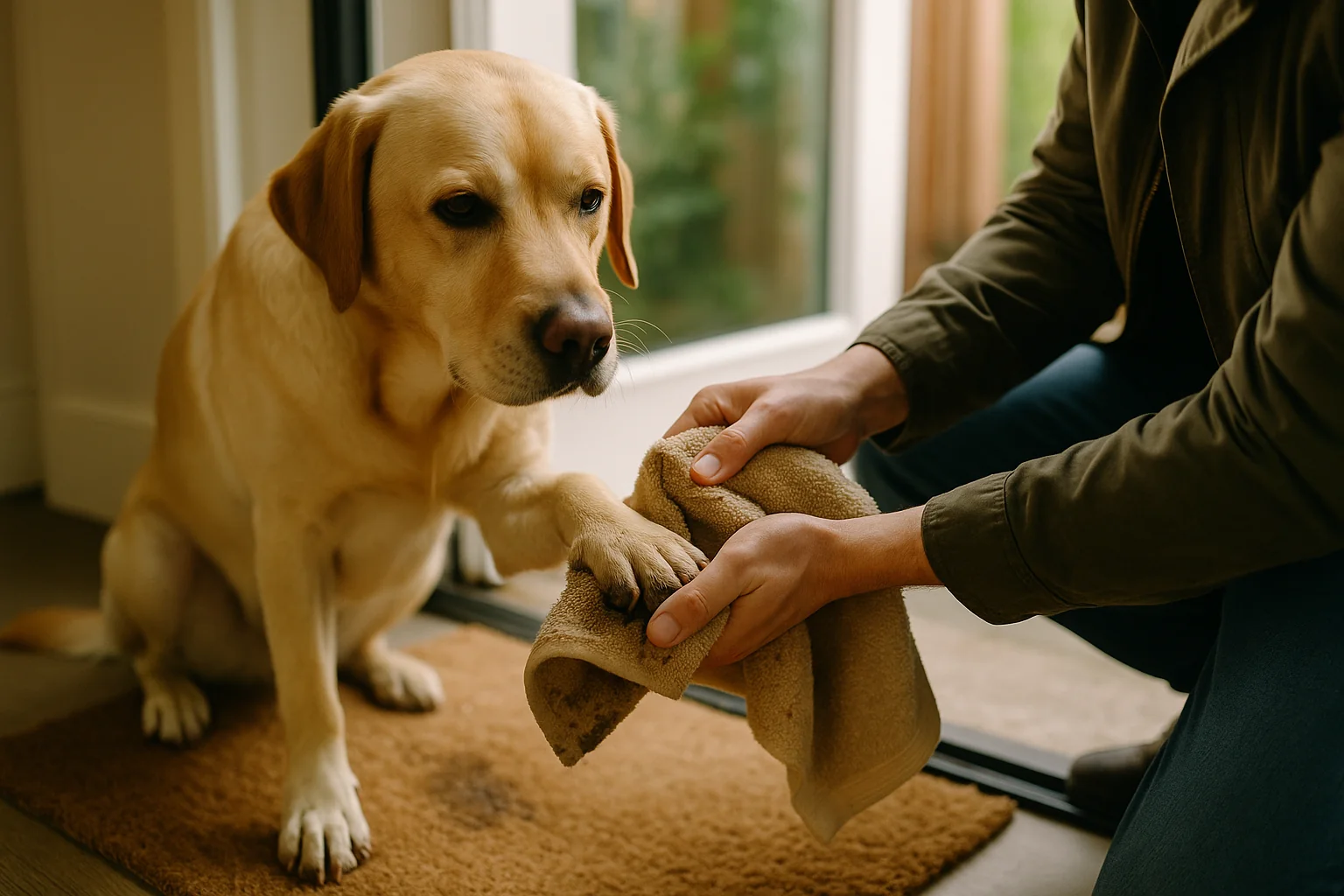
This is the routine that fits into a normal entryway without turning into a wrestling match:
- Wipe off loose debris first. A dry cloth over each paw clears surface dirt before any water gets involved, which keeps the next step faster.
- Rinse in a shallow basin. A couple of centimetres of lukewarm water is enough. Swish each paw for 10 to 15 seconds, roughly 20 to 30 seconds total per paw once you include the toes.
- Spread the toes gently. Most trapped debris hides between the toes, not on the pad itself, so this step matters more than the rinse itself.
- Squeeze off excess water, then towel-dry. Pat rather than rub, and pay extra attention to the webbing between toes.
- Glance at the pad surface while you’re there. You’re already holding the paw, so this costs nothing extra and is the easiest moment to catch a thorn, cut, or early irritation.
Once the sequence is familiar, four paws take under two minutes total, including the towel. For a fuller look at getting the drying step right, see our guide on properly drying a dog’s paws after cleaning.
Rinsing, Wiping, or Paw Wipes: Which Actually Works
A rinse is the strongest option for mud, standing water, or anything ground into the pad, since wipes rarely dilute what’s been pressed into the skin the way running or pooled water does. On dry pavement with only light dust or dirt, a damp microfiber cloth does nearly as good a job and costs nothing per use.
Purpose-made paw wipes are the most convenient middle ground for quick daily touch-ups, particularly for older dogs or apartments without easy basin access. Look for alcohol-free, fragrance-free formulas, since scented wipes are a common, avoidable source of paw skin irritation. In winter, favour a rinse over wipes: rock salt and de-icing chemicals need to be diluted and rinsed away, not just wiped across the pad.
Handling Muddy, Wet, or Winter Paws Without Wrecking the Floors
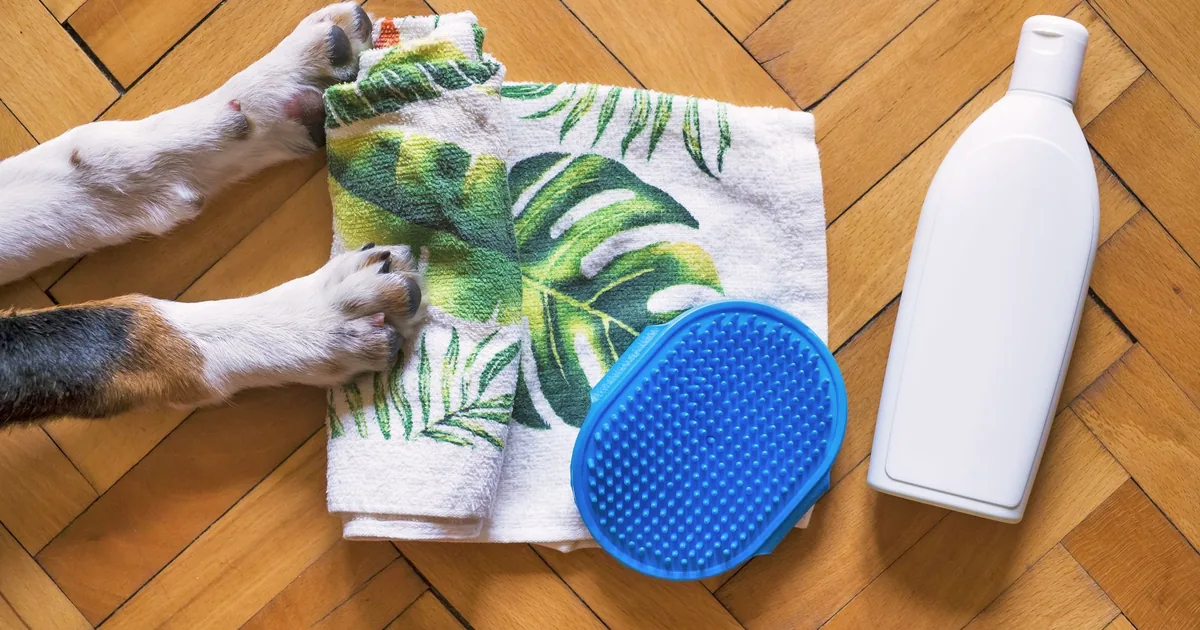
An absorbent mat and a shallow basin kept permanently by the entry turn this from a chore into a two-step habit: basin, then mat. A towel dedicated only to paws, rather than whatever hand towel is nearest, keeps the routine quick because it’s always where you expect it.
In icy or salted conditions, dogs that resist rinsing sometimes do better in boots for the walk itself rather than a wash on return; our roundup of accessories that protect a dog’s paws covers which types actually stay on. Either way, a paw that’s been walking on salted ground needs a proper rinse that day, not just a wipe, since residue left on the skin is a common cause of cracked or irritated pads through the colder months.
Building the Habit (and What to Check While You’re At It)
Consistency beats a perfect technique. Reward calm paw handling with a small treat, especially with puppies or dogs that instinctively pull their feet away; a few short, low-pressure sessions build tolerance faster than one long forced cleaning.
Because you’re already touching each paw during cleaning, fold in a quick look at the pad and toes rather than treating inspection as a separate task. Our guide to a proper daily paw inspection routine walks through exactly what a 30-second check per paw should cover, and pairing it with the cleaning habit means neither one gets skipped on a busy day.
Key takeaways
Clean every paw after each walk, not just the visibly muddy ones. Rinsing beats wipes for mud, wet ground, and winter salt. The toes trap more debris than the pad surface, so spread them during cleaning. Dry paws right after rinsing to avoid leaving moisture behind. Use the cleaning moment to also check for cuts, thorns, or swelling.
Frequently asked questions
What is the best way to clean a dog’s paws after a walk?
Rinse each paw in a shallow bowl of lukewarm water for 10 to 15 seconds, gently spreading the toes to clear trapped grit, then wipe dry with a towel. For light everyday dirt on dry ground, a damp cloth or a dog-safe wipe is enough.
Should you rinse your dog’s paws or use wipes?
Rinsing works better for mud, wet ground, or winter salt, since wipes alone rarely dilute what is ground into the pads. Wipes are fine for quick daily touch-ups on dry pavement when there is no visible mud or residue.
How often should you clean your dog’s paws?
After every walk on anything other than a clean, dry indoor-adjacent surface. Daily cleaning is normal for most dogs and takes under two minutes for all four paws once it becomes routine.
Can you use baby wipes on a dog’s paws?
Unscented, alcohol-free baby wipes are generally safe for occasional use, but a wipe made for dogs is a safer default since many baby wipes contain fragrance or preservatives that can irritate sensitive paw skin over repeated use.
Do you need to clean between your dog’s toes every time?
Yes. Debris, moisture, and allergens collect between the toes more than anywhere else on the paw, and skipping that area is the most common reason paw cleaning fails to prevent odor or irritation.
Want more practical, no-fluff paw care guidance as it’s published? Join the Paw Province Letter