The Signs That Show a Dog Is in Paw Pain
By Paw Province Editorial · Published September 3, 2026
TL;DR
Limping, weight shifting, and licking or chewing at one paw are the three most reliable signs of paw pain. Flinching when the paw is touched, swelling, heat, or an unusual smell often confirm it. A dog refusing to put any weight on a paw needs same-day vet attention. Subtler signs, like a shorter stride or more resting than usual, can mean pain a dog is trying to hide.
A dog that suddenly favors one leg, or keeps stopping mid-walk to lick a paw, leaves most owners guessing whether it is a minor scrape or something that needs real attention. Dogs cannot describe where it hurts, and many instinctively mask discomfort until it becomes hard to ignore. Knowing the actual signs, not just the obvious ones, makes the difference between catching a problem early and missing it for days. This guide breaks down what paw pain really looks like, from the subtle to the unmistakable.
Behavioral Signs That Show Up First
Limping is the sign most owners recognize immediately, but it is rarely the first one to appear. Before a dog visibly favors a leg, many show smaller changes: a shorter stride, more frequent stops on a walk, or sitting down sooner than usual during play.
Reluctance is another early flag. A dog that suddenly hesitates before jumping onto the sofa, pauses at the top of the stairs, or avoids a particular texture of ground, gravel, hot pavement, wet grass, may be protecting a sore paw rather than being stubborn.
Licking or chewing focused on a single paw, rather than general grooming, is one of the more reliable behavioral cues. Dogs lick paws for several reasons, and our guide on why dogs lick their paws covers how to tell ordinary grooming apart from a paw that is actually bothering them.
Physical Signs You Can Check Directly
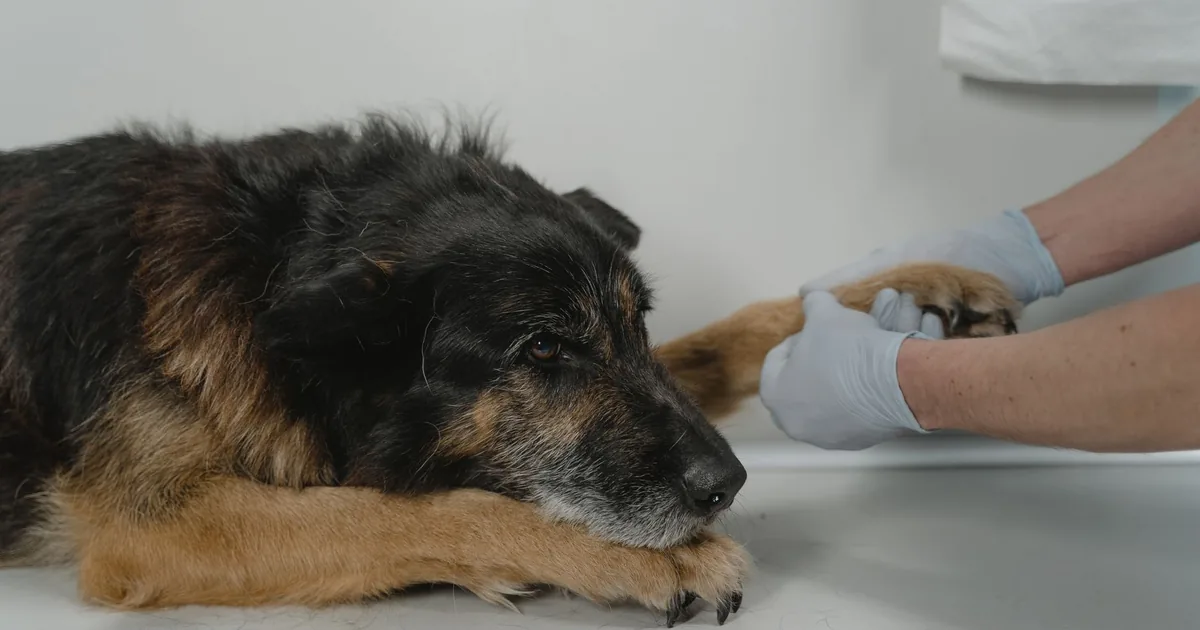
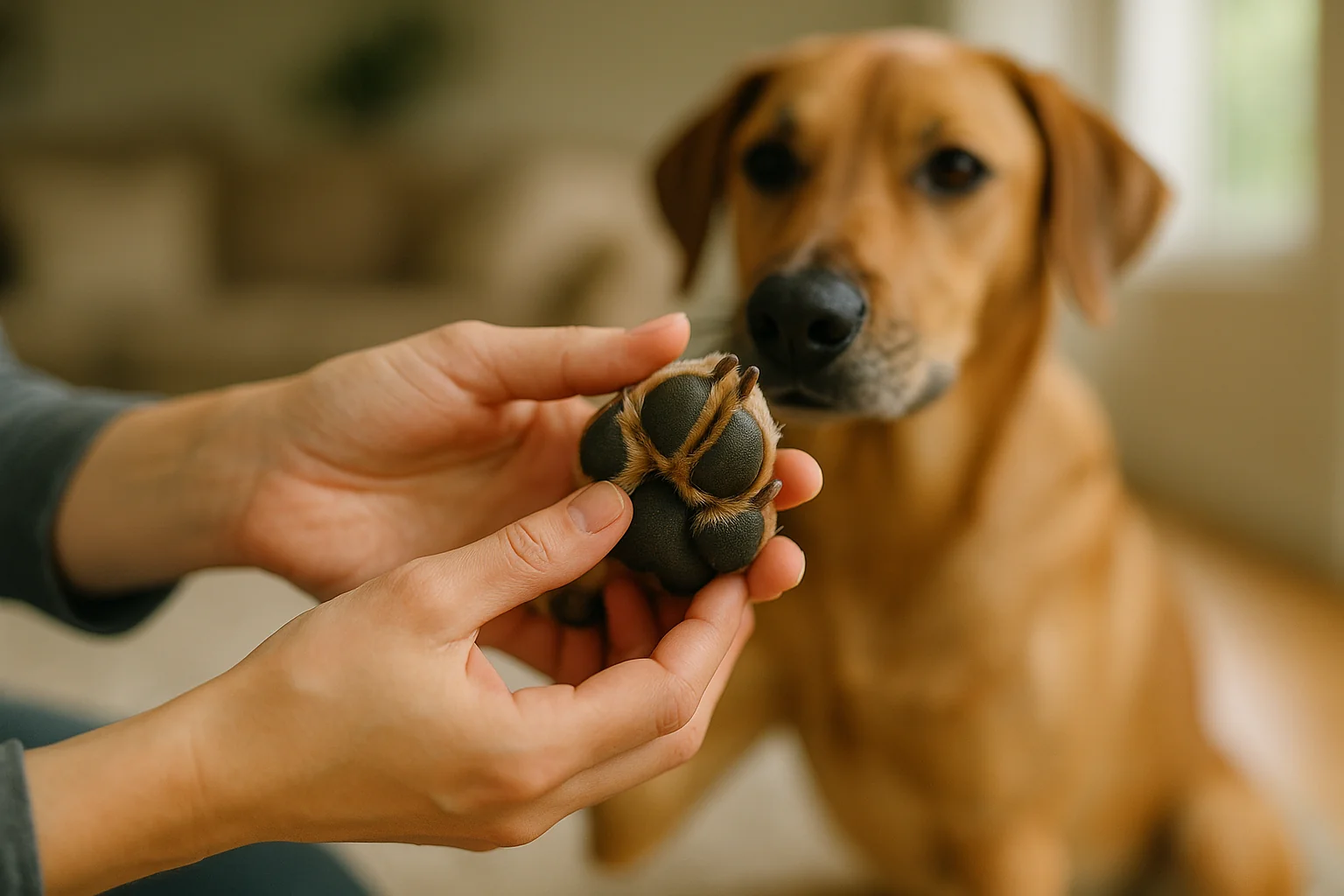
A hands-on check tells you more than watching from a distance. Gently run a hand down each leg and paw, comparing both sides. Swelling, unusual heat, or a flinch when you press a specific spot all point toward a local problem rather than general soreness.
Look between the toes and at the pads themselves for cuts, redness, or anything lodged in the skin. A grass seed, thorn, or splinter can cause intense pain from something barely visible; our guide on removing a foreign object from a dog's paw walks through how to spot and safely handle this.
Discoloration matters too. A pad that looks paler or more purple than the others, or skin between the toes that looks raw or damp, both suggest something is actively irritating the area rather than a one-off knock.
How Body Language Confirms What the Paw Is Telling You
Paw pain rarely shows up in isolation. A dog in discomfort often carries their weight differently, holds their tail lower, or seems more withdrawn than usual, even before a limp becomes obvious. Learning to read these wider cues, covered in our guide on reading dog body language, helps catch pain that a dog is actively trying to hide, which is common in more stoic breeds.
A dog standing with a paw slightly lifted, or shifting weight from one back leg to the other while standing still, is showing you exactly where the discomfort is, even without a single yelp.
Please read first
This article shares general information and lived experience, not individual veterinary or behavioural advice. If you’re concerned about your pet’s health or behaviour, please consult a vet or a qualified professional.
Mild Discomfort or a Same-Day Vet Visit
Not every sign means an emergency. A dog that limps briefly after a hard play session, then walks normally within an hour, is usually dealing with simple fatigue or a minor knock. Watching and resting them for the rest of the day is often enough.
What changes the calculation: a dog that refuses to put any weight on the paw at all, a wound that is bleeding or clearly deep, sudden and severe swelling, or limping that gets worse rather than better over a few hours. These warrant same-day attention rather than a wait-and-see approach. Our guide on when to see a vet about your dog's paw lays out the exact thresholds in more detail.
What Usually Causes These Signs
Paw pain after exercise often traces back to something simple: a strained muscle, an overworked pad, or a small foreign object picked up along the way, which our guide on why a dog limps after a walk covers in depth. Persistent or recurring pain, on the other hand, sometimes points to an underlying condition rather than a one-time injury, something we go through in our overview of the diseases that cause paw problems in dogs.
Checking your dog's paws as part of a normal routine, not only after you notice a limp, makes these signs much easier to catch early, before they turn into a bigger issue.
Key takeaways
Limping, weight shifting, and focused licking of one paw are the three clearest signs of pain. A hands-on check for swelling, heat, or a flinch confirms what you are seeing. Body language, like a lowered tail or a lifted paw at rest, often shows up before an obvious limp. A dog refusing all weight on a paw needs same-day attention, while a brief limp that resolves within an hour usually does not.
Frequently asked questions
What are the signs that a dog is in pain in their paw?
The clearest signs are limping or shifting weight off one leg, licking or chewing at a specific paw, flinching when it is touched, and reluctance to walk on certain surfaces. Swelling, heat, or an odd smell often go along with these.
Can a dog hide paw pain?
Yes, dogs are good at masking pain, especially mild or gradual pain. Watch for subtler cues like a shorter stride, more resting than usual, or hesitation before jumping, rather than waiting for obvious limping to appear.
Is licking one paw more than the others a sign of pain?
Often, yes. Occasional grooming is normal, but focused, repeated licking of a single paw usually points to something local: a cut, an irritation, a foreign object, or an infection worth checking.
How fast should I react if my dog suddenly won't put weight on a paw?
A dog that refuses to bear any weight at all, holding the paw completely off the ground, needs same-day veterinary attention. That level of pain rarely resolves on its own and can signal a fracture, deep wound, or serious infection.
Do paw pain signs look different in puppies versus older dogs?
Younger dogs tend to show sudden, obvious limping tied to an injury, while older dogs often show gradual signs like stiffness after rest, which can point toward joint issues rather than an acute paw problem.
Want more practical, realistic guidance like this as you learn to read your dog's cues? Join the Paw Province Letter