
What to Do If Your Dog Has a Paw Wound
By Paw Province Editorial · Published September 8, 2026
TL;DR
Rinse the wound with clean water or saline, apply gentle pressure with a clean cloth if it is bleeding, and skip alcohol or hydrogen peroxide entirely. A light, breathable bandage works for minor surface wounds, changed daily. Most minor wounds show clear improvement within 3 to 5 days. Bleeding that will not stop after 10 minutes, or increasing redness, swelling, or discharge after the first couple of days, means it is time to see a vet.
Your dog comes in from the yard holding a paw up, and there it is: a cut, a scrape, or a torn nail with blood on the floor. The first few minutes matter, but panic rarely helps, and most paw wounds are more manageable than they look at first glance. This guide walks through exactly what to do, step by step, from the first rinse to knowing when home care is no longer enough.
The First Few Minutes: Clean Before Anything Else
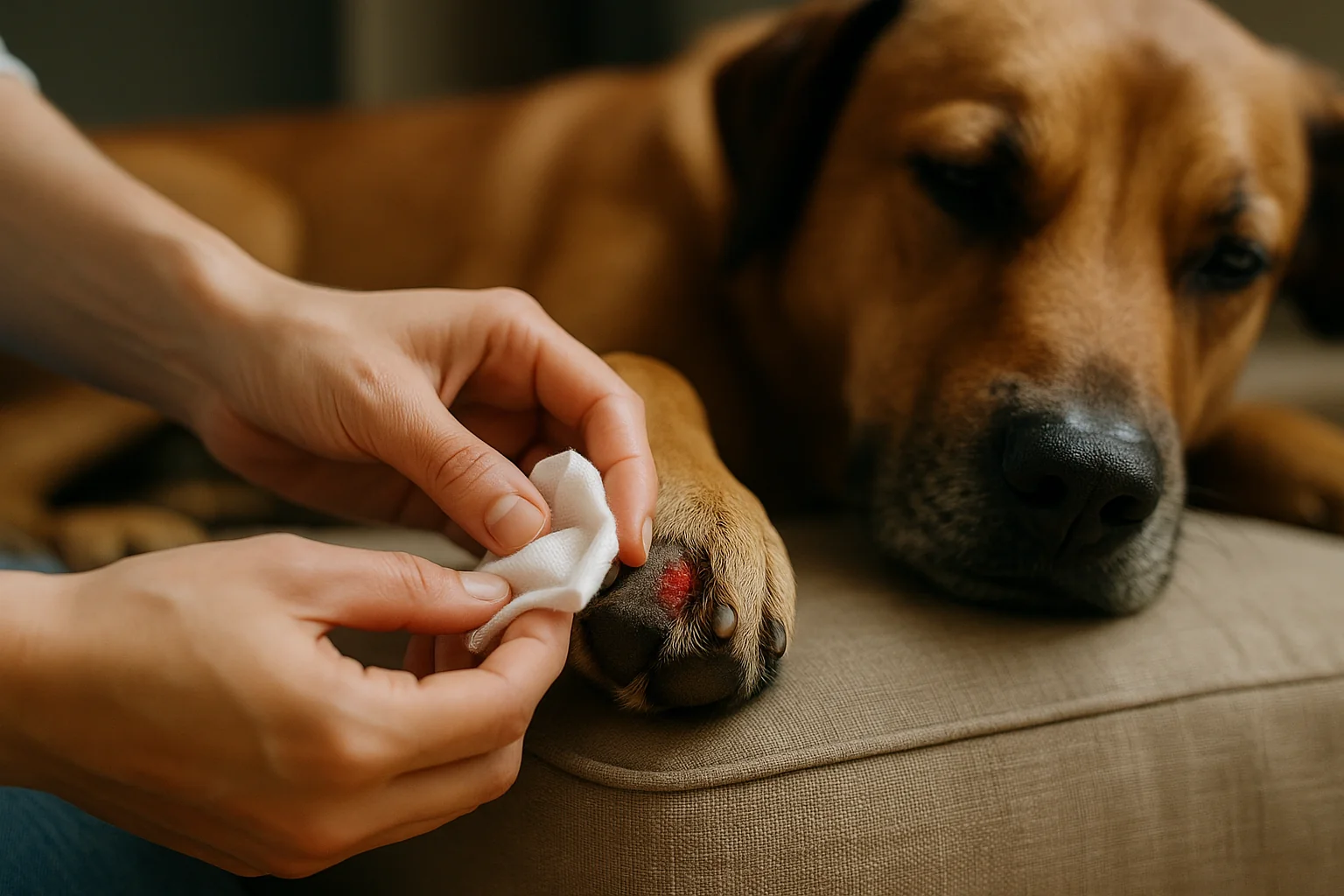
Rinse the wound gently with clean water or a saline solution to flush out dirt, grit, or grass before it works deeper into the tissue. Avoid alcohol, hydrogen peroxide, or harsh antiseptics directly on the wound; despite being common household staples, they damage healthy tissue and can actually slow healing.
If the wound is actively bleeding, apply firm, steady pressure with a clean cloth or gauze pad. Resist the urge to lift the cloth every few seconds to check; a consistent 5 to 10 minutes of pressure stops most minor bleeding far more effectively than repeated peeking.
Checking What You Are Actually Dealing With
Once the area is clean and bleeding has slowed, take a proper look. A shallow surface scrape, a small clean cut, and a deeper puncture or tear all need different levels of attention, and this is the point to make that distinction rather than guessing.
Check carefully for anything still lodged in the wound, since a thorn, splinter, or piece of glass left inside will keep the area irritated no matter how well you clean around it. Our guide on removing a foreign object from a dog's paw covers how to do this safely without pushing anything deeper.
Protecting the Wound Without Overdoing It
For a minor surface wound, a light, breathable bandage can keep it clean while it heals, but it should never be wrapped tightly enough to restrict circulation, and it needs changing daily to check underneath. A cone or protective boot during walks can prevent your dog from licking the area raw, which is one of the most common reasons a simple wound takes far longer to heal than it should.
Deeper wounds, or ones in an awkward spot like directly on a weight-bearing pad, are usually better handled by a vet, who can bandage properly and assess whether stitches or further treatment are needed underneath the surface.
Please read first
This article shares general information and lived experience, not individual veterinary or behavioural advice. If you’re concerned about your pet’s health or behaviour, please consult a vet or a qualified professional.
What a Realistic Healing Timeline Looks Like
A minor surface wound typically shows visible improvement within 3 to 5 days, with the area looking less red and the dog putting more weight on it comfortably. Most minor wounds are largely healed within 1 to 2 weeks, though this varies with the wound's location and how much the dog uses that paw day to day.
A wound that looks the same, or worse, after several days rather than steadily improving is not following a normal healing pattern, and that alone is reason enough to have it checked rather than waiting longer.
Warning Signs That Mean It Is Time for a Vet
Watch for increasing redness or swelling after the first day or two, warmth radiating from the area, a foul smell, or yellow or green discharge, all signs of infection rather than normal healing. A dog that seems to be getting more painful over time, rather than less, is also telling you something is not resolving on its own.
Our guide on when to see a vet about your dog's paw covers the exact thresholds in more detail, and our overview of the signs that show a dog is in paw pain can help you judge how much discomfort your dog is actually showing. For everyday prevention going forward, our Dogs section covers routine paw care that catches small injuries before they become bigger problems.
Key takeaways
Rinse first with clean water or saline, never alcohol or hydrogen peroxide, and apply steady pressure to stop bleeding. A light bandage works for minor wounds if changed daily; deeper wounds are better left to a vet. Clear improvement should show within 3 to 5 days. Increasing redness, warmth, discharge, or worsening pain after the first couple of days means it is time for veterinary attention.
Frequently asked questions
What should I do if my dog has a wound on their paw?
Rinse the wound with clean water or saline to remove debris, apply gentle pressure with a clean cloth if it is bleeding, and avoid alcohol or hydrogen peroxide, which damage healthy tissue. Keep the paw clean and dry, and monitor it daily for signs of infection.
How do I stop a dog's paw wound from bleeding?
Apply firm, steady pressure with a clean cloth or gauze for several minutes without lifting to check too often. Most minor cuts stop bleeding within 5 to 10 minutes of consistent pressure; if bleeding continues past that, it needs veterinary attention.
Should I bandage a dog's paw wound myself?
A light, breathable bandage is fine for a minor surface wound to keep it clean, but it should be changed daily and never wrapped too tightly. Deeper wounds are better left to a vet, who can bandage properly and check for issues underneath.
How long does a paw wound normally take to heal?
A minor surface wound typically shows clear improvement within 3 to 5 days and is mostly healed within 1 to 2 weeks. A wound that looks the same or worse after several days, rather than steadily improving, needs a vet check.
What are the signs a paw wound has become infected?
Increasing redness or swelling after the first couple of days, warmth around the wound, a foul smell, yellow or green discharge, and a dog that suddenly seems more painful rather than less are the main signs of infection needing veterinary treatment.
Want more practical, realistic guidance like this for handling everyday dog mishaps? Join the Paw Province Letter