How to Remove a Foreign Object From a Dog’s Paw
By Paw Province Editorial · Published September 9, 2026
TL;DR
A small, clearly visible object like a surface thorn or a piece of gravel can usually be removed at home with clean tweezers, pulled in the same direction it went in. Grass awns, deeply embedded objects, or anything the dog will not let you near are better left to a vet. Continued limping, licking, or swelling a day or two after removal suggests something is still in there or infection has started.
Your dog suddenly stops mid-walk, lifts a paw, and starts frantically licking or chewing at it. Nine times out of ten, something has lodged itself between the toes or in a pad, a thorn, a piece of gravel, a stray grass seed. The instinct to fix it immediately is understandable, but pulling at the wrong thing the wrong way can make matters worse. This guide covers the safe way to check for and remove a foreign object, and exactly when to stop and call a vet instead.
What Usually Gets Stuck, and Why It Matters
Thorns, splinters, small stones, and glass fragments are common, and most sit near the surface where they are relatively easy to spot and remove. Grass awns, often called foxtails, are the trickier case: their barbed, arrow-like shape lets them slide one direction only, deeper into the tissue, which is why a partially embedded awn is a different situation from a splinter sitting on top of the skin.
Knowing roughly what you are dealing with before attempting removal changes the approach, and it is worth taking a moment to actually identify the object rather than pulling at the first thing you see.
Checking the Paw Properly First
Sit somewhere calm and well-lit, and gently spread the toes apart to look between each one, then check the pads themselves for anything embedded or a puncture mark without an obvious object left behind. A magnifying light or a phone flashlight helps considerably here, since small objects like grass awns can be surprisingly hard to spot against fur.
Making this kind of check a habit, not just after a limp appears, catches many objects before they cause real pain; our guide on a daily dog paw inspection routine covers how to build that into a quick habit.
Removing a Visible, Surface-Level Object
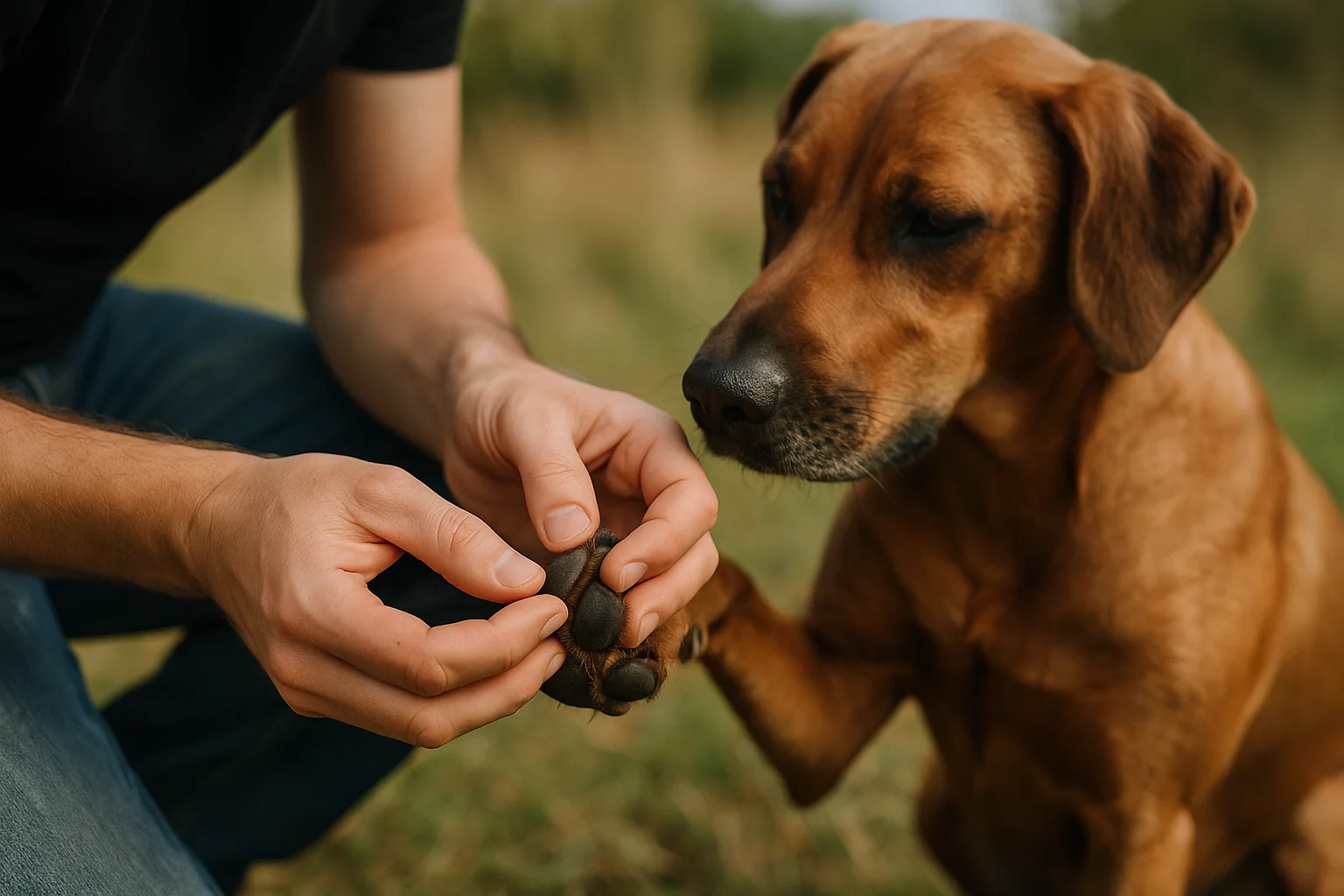
If the object is small, clearly visible, and only lightly embedded, clean tweezers are usually all you need. Grip the object as close to the skin as possible and pull firmly in the same direction it entered, rather than at an angle, which can snap it and leave a fragment behind.
Have someone else gently hold and reassure the dog if possible, since even a calm dog may flinch or pull away at the moment of removal. Once it is out, clean the area gently; our guide on what to do if your dog has a paw wound covers the right way to clean and monitor the spot afterward.
Please read first
This article shares general information and lived experience, not individual veterinary or behavioural advice. If you’re concerned about your pet’s health or behaviour, please consult a vet or a qualified professional.
When to Stop and Leave It to a Vet
Some situations are not worth attempting at home. A grass awn that is partly buried rather than sitting on the surface, an object that has broken off with no visible end to grip, or anything embedded deep enough that you cannot see where it stops, all call for a vet's tools and, often, sedation to remove safely and completely.
Just as importantly, a dog that pulls away sharply, growls, or clearly will not tolerate the area being touched is telling you the pain is significant. Forcing the issue at that point risks a bite or driving the object deeper, neither of which helps. Our guide on the signs that show a dog is in paw pain can help you judge how much discomfort is actually involved before deciding whether to attempt removal at all.
After Removal: What to Watch For
Even a successful removal is not automatically the end of it. Keep an eye on the spot over the next day or two for swelling, discharge, or continued limping, all of which suggest either a fragment left behind or an infection starting where the object was.
If anything about the paw seems to be getting worse rather than settling down, our guide on when to see a vet about your dog's paw covers exactly where that line sits, so you are not left guessing whether to wait it out.
Key takeaways
Surface-level objects like a visible thorn can usually be removed at home with clean tweezers, pulled in the same direction they entered. Grass awns and deeply embedded objects are safer left to a vet, who has the right tools. A dog that will not tolerate the area being touched is signaling significant pain; do not force it. Watch the spot for a couple of days after removal for signs a fragment remains or an infection is starting.
Frequently asked questions
How do I safely remove a foreign object from my dog's paw?
If the object is small and clearly visible, like a thorn or gravel sitting on the surface, gently pull it out in the same direction it entered using clean tweezers. If it is deep, broken off, or the dog will not let you near it, leave removal to a vet.
What are the most common objects that get stuck in a dog's paw?
Grass awns (foxtails), thorns, splinters, small stones, and glass fragments are the most common. Grass awns are particularly troublesome because their shape lets them migrate deeper into tissue rather than staying put.
Is it safe to remove a grass awn from a dog's paw myself?
Only if it is clearly visible and only partly embedded. Grass awns have tiny barbs that let them move one direction, deeper into the tissue, so a partially buried one is safer left to a vet with the right tools.
What if my dog will not let me touch the paw at all?
Do not force it. A dog that pulls away sharply or growls when you approach the area is telling you it is too painful for a home attempt. Muzzling and forcing removal risks driving the object deeper or causing a bite.
How do I know if something is still stuck after I think I removed it?
Continued limping, licking, or swelling a day or two after removal usually means either part of the object is still inside or an infection has started. Both situations need a vet check rather than more waiting.
Want more practical, realistic guidance like this for everyday paw mishaps? Join the Paw Province Letter