Why Your Dog’s Paws Are Wet
By Paw Province Editorial · Published September 16, 2026
TL;DR
Damp dog paws are usually just thermoregulation at work, since sweat glands in the pads are one of the few places dogs release heat through the skin. Stress can also trigger sudden paw sweating, similar to sweaty palms in people. Wetness from licking looks and behaves differently: it's concentrated around the toes, often witnessed directly, and sometimes leaves staining. None of these are dangerous on their own, but leaving paws wet for long periods creates conditions where yeast and bacteria thrive. Wetness paired with smell, redness, or constant one-paw licking is worth a closer look rather than normal moisture.
You pick up your dog's paw and notice it's damp, not soaked, just noticeably moist, even though there's been no rain and no puddle in sight. It's easy to assume something's wrong, but in most dogs this is just biology doing its job. This guide covers the three real reasons a dog's paws end up wet, how to tell them apart, and when dampness actually signals a problem worth addressing.
Thermoregulation: The Most Common Reason
Dogs can't sweat across their skin the way humans do; their coat and skin structure aren't built for it. Instead, sweat glands concentrated in the paw pads (called merocrine glands) release moisture as one of the dog's few direct cooling mechanisms, working alongside panting to manage body temperature.
This means paw dampness naturally increases during exercise, in warm weather, or after a period of excitement, and settles back down once the dog cools off. It's a completely normal process, not a sign that anything is off, and doesn't need any intervention beyond the usual post-walk paw check.
Stress-Related Sweating: A Less Obvious Trigger
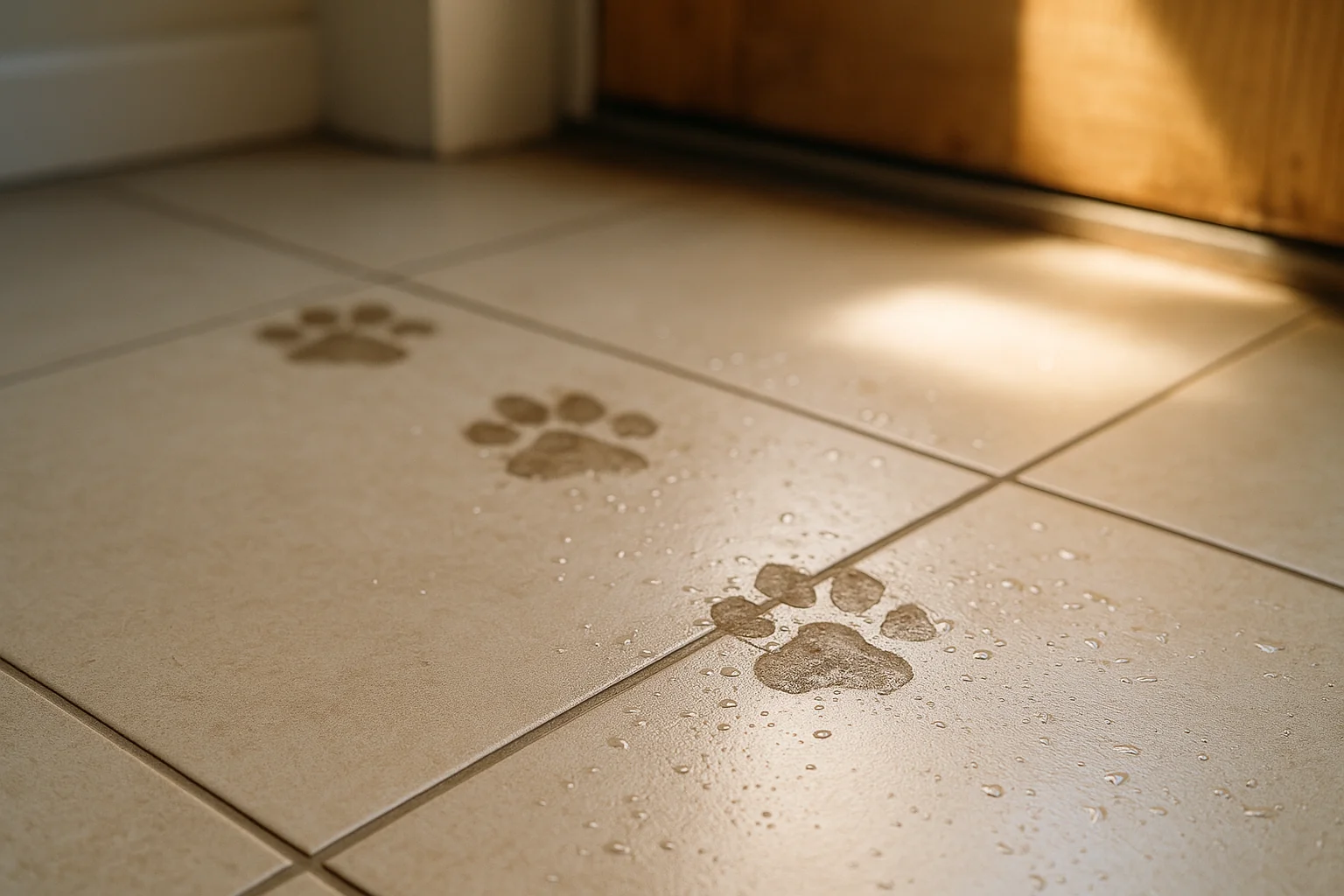
Paw sweating is also a recognised physical response to stress and anxiety in dogs, comparable to sweaty palms in a nervous person. Owners sometimes notice damp paw prints on a vet clinic floor, during a car ride a dog dislikes, or around fireworks and thunderstorms, even when the dog hasn't been active or in a warm room.
The distinguishing feature here is timing tied to a specific trigger rather than temperature or exercise. If wet paws consistently show up around the same stressful situation and dry out once the dog relaxes, stress is the more likely explanation than heat.
Wetness From Licking: A Different Kind of Damp
The third common source isn't sweat at all: it's saliva. A dog that licks its paws frequently, whether from normal grooming or a behavioural or medical cause, leaves visible wetness concentrated around the toes and the lower leg fur rather than spread evenly across the pad.
This type is usually easier to confirm since you can often witness the licking directly, and over time it may leave a reddish-brown stain on light-coloured fur. If you're noticing this pattern more than occasional sweat-related dampness, our guide on why dogs lick their paws covers how to judge whether the underlying licking itself needs attention.
Please read first
This article shares general information and lived experience, not individual veterinary or behavioural advice. If you’re concerned about your pet’s health or behaviour, please consult a vet or a qualified professional.
Why Leaving Paws Wet Isn't Entirely Risk-Free
None of the three causes above are dangerous by themselves, but prolonged dampness, regardless of its source, creates the exact conditions yeast and bacteria need to multiply between the toes. This is one of the main reasons interdigital infections develop more often in dogs that swim, walk in wet grass, or live in humid climates.
Making a habit of thoroughly drying your dog's paws after they get wet, rather than letting them air-dry on their own, closes most of that risk without much extra effort. Dogs with dense fur between the pads benefit even more from this step, since their fur holds moisture longer than a dog with shorter paw fur.
When Wetness Signals Something Else
Ordinary thermoregulation and stress-related sweating don't come with other symptoms. What changes the picture is wetness paired with a stronger-than-usual smell, visible redness, or a dog that keeps returning to lick the same paw specifically. That combination points toward irritation or infection rather than normal moisture, and our guide on recognizing signs of paw pain covers the related cues worth checking alongside wetness.
A sudden change is also worth noting on its own: a dog whose paws have never been particularly damp before, suddenly showing consistent wetness with no obvious trigger like heat or stress, is a pattern shift worth watching rather than dismissing.
Key takeaways
Damp paws are usually normal thermoregulation, since sweat glands in the pads help dogs release heat. Stress is a real but less obvious trigger, tied to a specific situation rather than temperature. Wetness from licking looks different and is concentrated around the toes, often visibly witnessed. None of these causes is dangerous alone, but prolonged dampness raises the risk of interdigital infection. Wetness with smell, redness, or focused licking on one paw is worth a closer look.
Frequently asked questions
Why are my dog's paws always a bit damp?
Dogs have sweat glands concentrated in their paw pads, which release moisture to help regulate body temperature since dogs can't sweat through their skin the way humans do. A slightly damp paw, especially after activity or in warm weather, is normal.
Can stress make a dog's paws sweat?
Yes, paw pad sweating is one of the physical signs of stress or anxiety in dogs, similar to sweaty palms in people. It tends to appear suddenly around a specific trigger, like a vet visit or a loud noise, rather than being constant throughout the day.
How do I know if wet paws are from licking instead of sweating?
Saliva-related wetness usually comes with visible dampness concentrated around the toes and lower leg fur, sometimes with staining, and is often witnessed directly. Sweat-related wetness is more localised to the pads themselves and isn't linked to any licking behaviour.
Is it bad to leave a dog's paws wet after a walk?
Leaving paws wet for extended periods isn't dangerous on its own, but it does create the damp conditions that make yeast and bacterial infections more likely, especially between the toes. Drying paws after wet walks is a simple, low-effort prevention step.
When does paw wetness mean something is wrong?
It's worth a closer look if wetness is paired with a strong smell, redness, constant licking at one paw, or if it appears suddenly without a clear cause like heat, exercise, or stress. That combination points toward infection or irritation rather than normal moisture.
Want more practical, no-nonsense paw care guidance in your inbox? Join the Paw Province Letter