
Your Dog Is Biting Its Paws: What to Do
By Paw Province Editorial · Published September 12, 2026
TL;DR
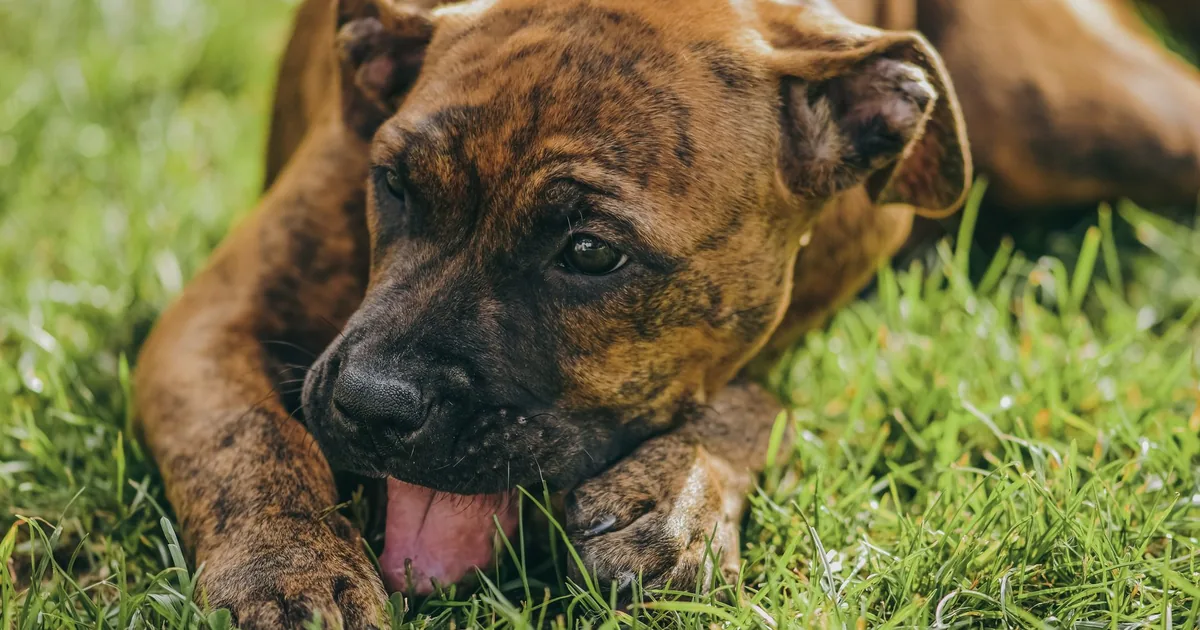
Paw biting is a step up from licking and usually means the itch, pain, or irritation has gotten bad enough that licking alone is not cutting it. Check the paw closely for a splinter, cut, swelling, or redness before assuming it is behavioural. Allergies and interdigital infections are the most common physical causes; stress and anxiety can trigger biting too, particularly around loud noises or separation. Act within the first few days rather than waiting, since biting can break the skin and turn into an infected hot spot fast. See a vet if the skin is broken, if there is swelling or a smell, or if it does not improve within a few days.
Licking is one thing, but hearing actual biting, that quicker, sharper sound of teeth working at a paw, tends to worry owners more, and for good reason. Biting usually signals that whatever is bothering your dog has crossed a line where licking no longer relieves it. The good news is that most causes are identifiable within a day or two of paying close attention. This guide covers what to check first, the likely causes, and exactly when to stop watching and start acting.
Why Biting Is Different From Licking
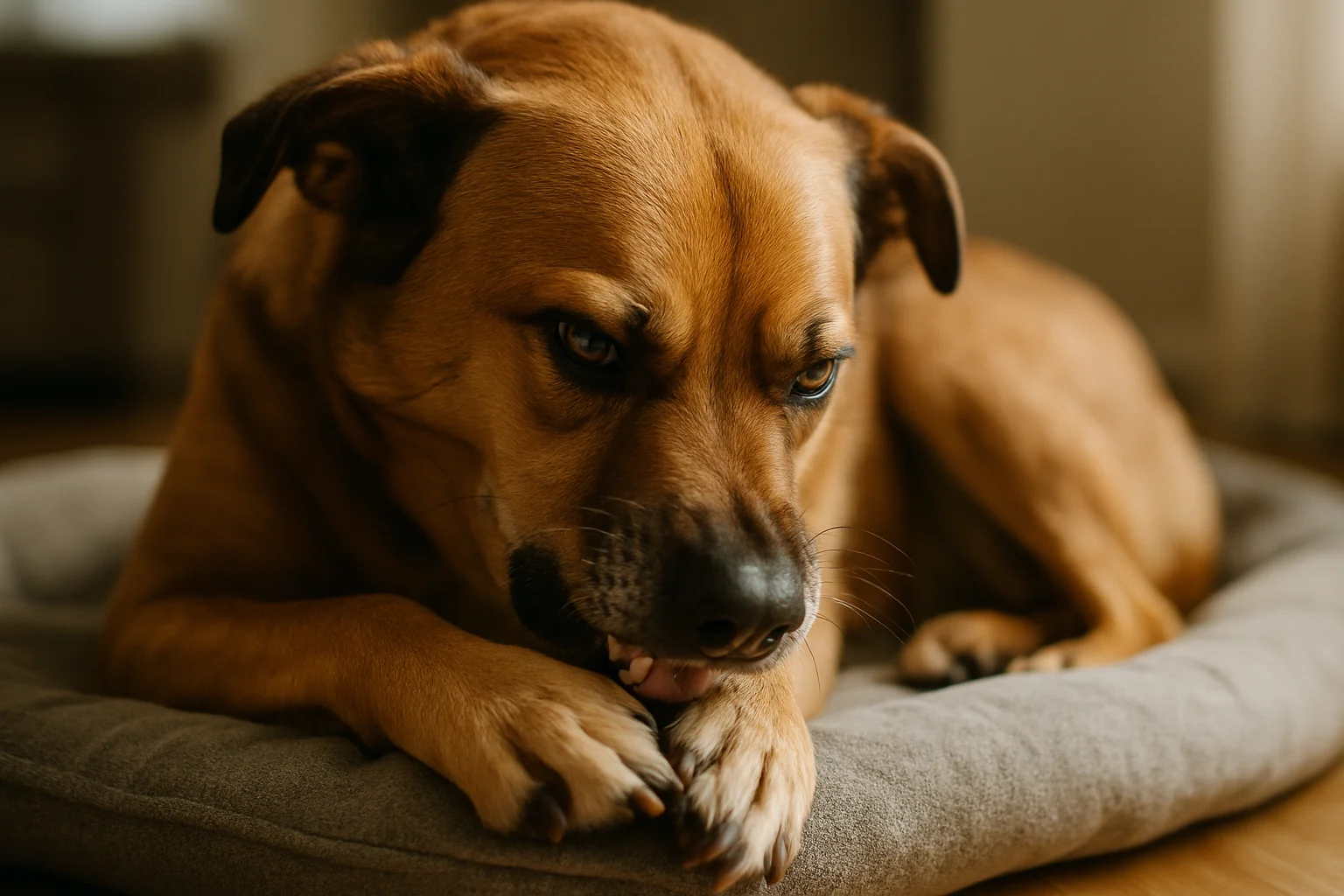
Licking is often exploratory or mildly soothing. Biting is more deliberate, and dogs generally only escalate to it when an itch, pain, or irritation feels intense enough that a lighter touch is not providing relief. If you have already read about why dogs lick their paws, think of biting as the next stage on the same spectrum, not a completely separate issue.
That escalation matters practically: a dog that bites at a paw for several minutes at a time can break the skin within a single session, especially around the delicate skin between the toes, turning a manageable itch into an open wound that is harder to treat and slower to heal.
Check the Paw Before You Assume Anything
Before guessing at a cause, physically look at the paw. Spread the toes and check the pads for a splinter, thorn, small cut, or embedded grass awn, all common triggers for sudden, focused biting on one specific foot. If something is visibly lodged in the pad, our guide on removing a foreign object from a dog's paw walks through how to do this safely at home.
Also check for swelling, heat, or a reddened patch of skin, since these point toward infection or a more painful underlying cause rather than a passing itch. Comparing the paw to the other three is a fast way to spot something that stands out.
Please read first
This article shares general information and lived experience, not individual veterinary or behavioural advice. If you’re concerned about your pet’s health or behaviour, please consult a vet or a qualified professional.
The Common Causes Behind Paw Biting
Allergies, whether environmental, food-related, or flea-related, are one of the most frequent drivers, and they typically cause biting on more than one paw rather than a single foot. Interdigital infections, caused by yeast or bacteria trapped between the toes, are another leading cause, often starting as excess moisture and progressing to visible irritation that a dog cannot leave alone.
A number of underlying conditions can also present with paw biting as an early symptom, which is worth keeping in mind if the behaviour does not resolve with basic care; our overview of conditions that cause dog paw problems covers the less obvious possibilities.
Stress and anxiety are a real but less common cause. Dogs sometimes bite at a paw during separation, after a loud noise, or during a stressful change at home, similar to a nervous habit in people. This type tends to appear in short bursts tied to a specific trigger rather than continuously throughout the day.
What to Do in the Moment
If you catch your dog mid-bite, resist the urge to scold sharply, since that can add stress on top of whatever is already bothering them. Instead, gently redirect with a toy, a short walk, or a change of room, then check the paw once your dog has settled.
If the paw looks irritated but not seriously injured, cleaning it gently and keeping it dry for the rest of the day often helps; our guide on treating an irritated dog paw covers simple at-home care for exactly this stage. If your dog keeps returning to the same spot within minutes, a soft sock or a purpose-made cone temporarily prevents further damage while you work out the underlying cause.
When to Stop Watching and See a Vet
Most cases of paw biting resolve within a few days once the trigger, whether it is a splinter, mild allergy flare, or short-lived stress, is identified and managed. What should not be left to run its course is biting that has already broken the skin, biting paired with visible swelling or a smell, or biting that continues at the same intensity after several days of your own care.
If you are unsure whether what you are seeing crosses that line, our broader guide on when to see a vet for a dog paw problem lays out clearer thresholds. Left unaddressed, a bitten paw can develop into a genuine wound; our guide on what to do about a dog paw wound is worth bookmarking in case it gets to that point.
Key takeaways
Biting is a step beyond licking and usually means real discomfort, not idle habit. Check the paw physically first, for a splinter, cut, swelling, or redness, before assuming a behavioural cause. Allergies and interdigital infections are the most common physical triggers; stress-related biting tends to appear in short bursts. Act within the first few days, since biting can break the skin quickly. See a vet if the skin is broken, there is swelling or a smell, or nothing improves after several days.
Frequently asked questions
Why is my dog biting and chewing at its paw?
Biting usually means an itch or pain that licking alone has not resolved. Common causes include allergies, an interdigital infection, a stuck splinter or grass awn, or a licking habit that has escalated. Check the paw closely rather than guessing.
Is it normal for a dog to chew its paws sometimes?
Occasional light chewing, like nibbling after a walk or during self-grooming, can be normal. Repeated, focused biting on one paw, especially if it draws blood or removes fur, is not and points to an underlying cause that needs addressing.
How do I stop my dog from biting its paw right now?
Gently distract with a toy or a short walk, check the paw for anything visible like a thorn or cut, and clean it if needed. If your dog can reach the same spot again within minutes, a temporary barrier like a sock can help while you sort out the cause.
Can stress cause a dog to bite its paws?
Yes, dogs sometimes bite at their paws as a stress response, similar to how some people bite their nails. This tends to appear during anxious moments, like separation or loud noises, rather than continuously throughout the day.
When does paw biting need a vet visit?
See a vet if the biting has broken the skin, if there is swelling, heat, discharge, or a smell, or if it has continued for more than a few days despite your best efforts to identify and address the cause at home.
Want more practical, no-nonsense paw care guidance in your inbox? Join the Paw Province Letter